
Cancer screening, Early detection, Health screening Singapore, Lung cancer, Medical screening, Preventive health
Lung Cancer in Singapore Common, Serious, and Still Under-Discussed
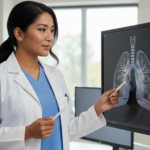

When conversations turn to cancer in Singapore, breast, colorectal, and prostate cancer often take centre stage. Yet lung cancer remains one of the most common — and most serious — cancers in the country, affecting both men and women in significant numbers. Despite this, awareness of lung cancer symptoms, causes, and screening options remains limited.
This article aims to shed light on lung cancer in Singapore — why it matters, who is at risk, and how screening and early detection can make a meaningful difference.
According to national cancer data, lung cancer ranks as the second most common cancer among men and the third most common among women in Singapore. It is also one of the leading causes of cancer-related deaths locally, accounting for approximately 24.9% of cancer deaths among men and 15.9% among women.
What makes lung cancer particularly concerning is that it is often diagnosed at a later stage, when symptoms become more noticeable. By that point, treatment options may be more complex. This late detection contributes to poorer outcomes compared to cancers that are routinely screened for and detected earlier. Survival outcomes for lung cancer vary significantly by stage at diagnosis. Stage 1 lung cancer has a 70% five-year survival rate, while Stage IV is often incurable.
Yet, unlike breast or colorectal cancer, lung cancer screening and risk awareness are still not widely discussed in everyday health conversations.
A common misconception is that lung cancer only affects smokers. While smoking remains a major risk factor, a significant proportion of lung cancer cases occur in non-smokers, particularly among women in Asia. The World Health Organization has reported that second-hand smoke contains more than 7,000 chemicals, including at least 70 known cancer-causing substances. The U.S. Centers for Disease Control and Prevention (CDC) estimates that passive smoking raises lung cancer risk by about 20-30 per cent.
Key risk factors include:
Unlike routine screenings such as mammograms or Pap smears, lung cancer screening is risk-based, meaning it is recommended for specific groups rather than the general population.
Common screening method: Low-dose CT (LDCT) scan of the lungs
This scan uses a lower amount of radiation compared to a standard CT scan and is designed to detect early lung changes before symptoms appear.
Who may benefit from screening?
Individuals aged 55 to 74 with a smoking history of 30 or more pack-years, who are current smokers or have quit within the past 15 years, may be considered for low-dose CT (LDCT) screening for lung cancer.
How often is screening done?
For those at higher risk, screening is often discussed on an annual basis. Screening is typically discontinued once a person has stopped smoking for more than 15 years, develops medical conditions that make further investigation unsuitable, or is unwilling to undergo additional diagnostic procedures or treatment if required.
In its early stages, lung cancer may not cause noticeable symptoms. As the disease progresses, symptoms can vary and may be non-specific, making them easy to overlook or attribute to other conditions. Commonly reported symptoms include a persistent cough, shortness of breath, chest discomfort, unexplained weight loss, fatigue, or recurrent respiratory infections. Some individuals may also notice coughing up blood or a change in an existing cough. Because these symptoms can be caused by many conditions, their presence does not necessarily indicate lung cancer; however, persistent or worsening symptoms should be evaluated by a healthcare professional.
Lung cancer treatment depends on several factors, including:
Treatment approaches may include:
When lung cancer is detected at an early stage, more treatment options may be available. Early-stage cancers may sometimes be managed with less extensive treatment compared to advanced disease. Lung cancer can be cured in the early stages when the cancer is localised and can be completely removed by surgery.
Lung cancer continues to affect thousands of lives in Singapore, yet it receives limited public attention — particularly among women and non-smokers, as environmental and everyday exposure risks are often overlooked. By increasing awareness of risk factors, understanding who may benefit from screening, and acknowledging the value of early detection, we can begin to shift the narrative around this disease.
Because health screening is not only about reacting to symptoms, but about making informed, proactive choices for long-term wellbeing. If you have concerns about your lung health or risk factors, a conversation with a healthcare professional can be a valuable first step.

Cancer screening in Singapore is no longer just age-based. Learn which screenings matter, who should consider them, and why early detection helps.

I’m Dr. Juliana Latif, co-founder of Fusion Medical at Wheelock Place. At 37, I had just welcomed my first child and completed a year of breastfeeding. As my husband and I prepared for IVF to expand our family, I noticed a lump during my regular breast self-examination—a habit I’d maintained monthly, even while nursing. I assumed it was just a blocked milk duct. But just a week before our IVF procedure, an ultrasound revealed something I never expected: I had breast cancer.

Get ready for your health screening to take control of your long-term health. Stay informed and proactive for a healthier tomorrow.

Dr Wenus Ho is a family physician and a designated workplace doctor with more than a decade of clinical experience. She is also currently a postgraduate tutor for the Graduate Diploma of Family Medicine (GDFM) Training Program in the Yong Yoo Lin School of Medicine, Singapore....

After graduating from Guys’, King’s and St Thomas’ School of Medicine in the United Kingdom, Dr Juliana went on to complete her Graduate Diploma in Family medicine at the National University of Singapore. She also has completed her diploma in Occupational Medicine. Dr Juliana applies her...

Dr Yong graduated from University College London, United Kingdom, with a Bachelor of Medicine & Bachelor of Surgery with distinction in medical sciences. She has more than 10 years of experience as a general practitioner, and was accredited as family physician by the Family Physician Accreditation...
Start your skin health restoration journey with us today!

501 Orchard Rd #04-11, Singapore 238880

Mon-Fri :8:30am – 5:30pm
Sat :8:30am – 1:00pm
Sun / PH :Closed
1 Fusionopolis Link, #01-05 Nexus
@ One-North , Singapore 138542
Mon-Fri :8:30am – 5:30pm
Sat/Sun / PH :Closed


Fat Freeze + X Wave at S$98
Vanquish ME + X Wave at S$199

