
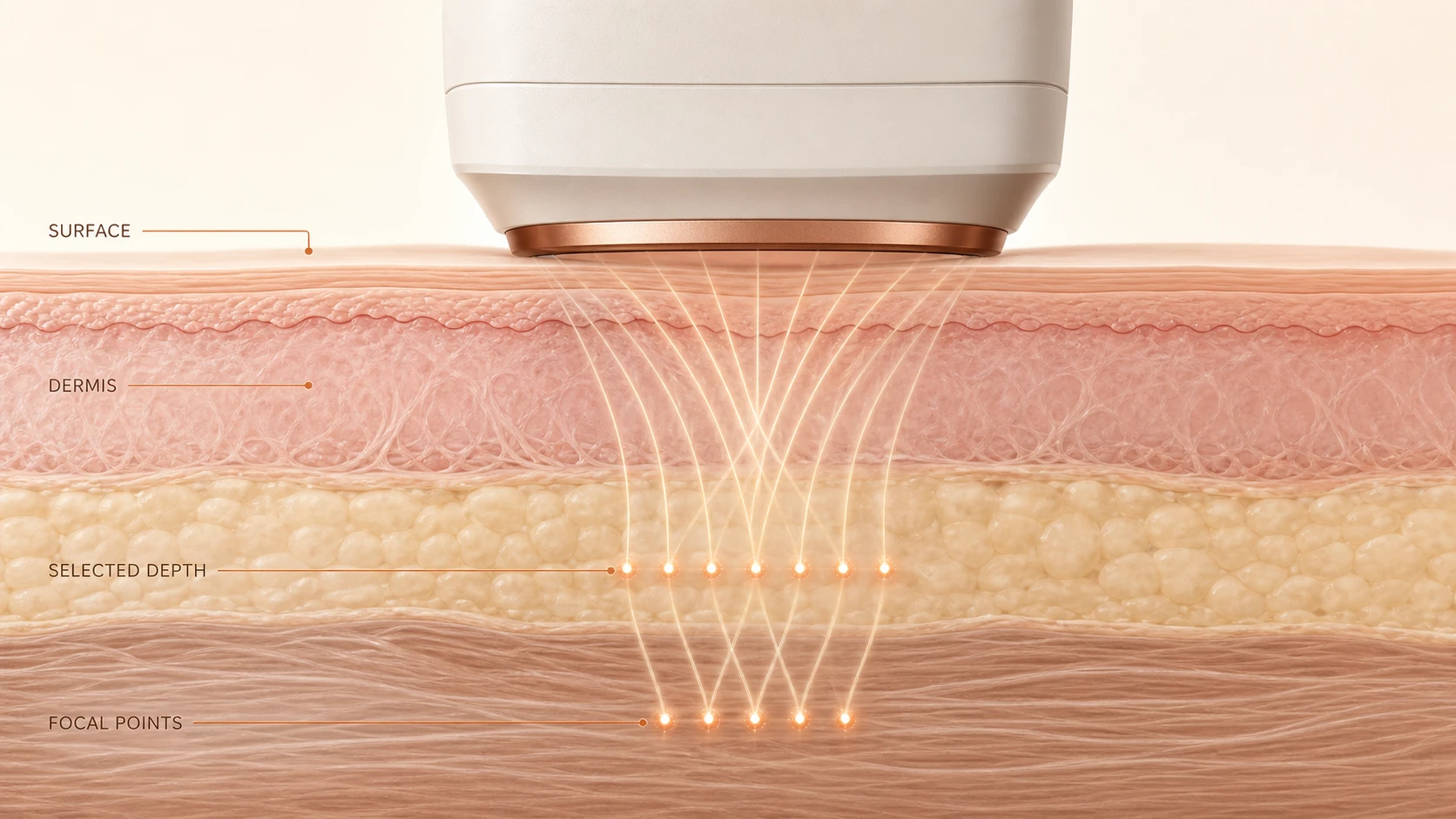
Ultrasound focused beneath the surface
Ultrasound waves pass through the skin and converge at focal points at a selected depth, so the energy is concentrated where treatment is planned.


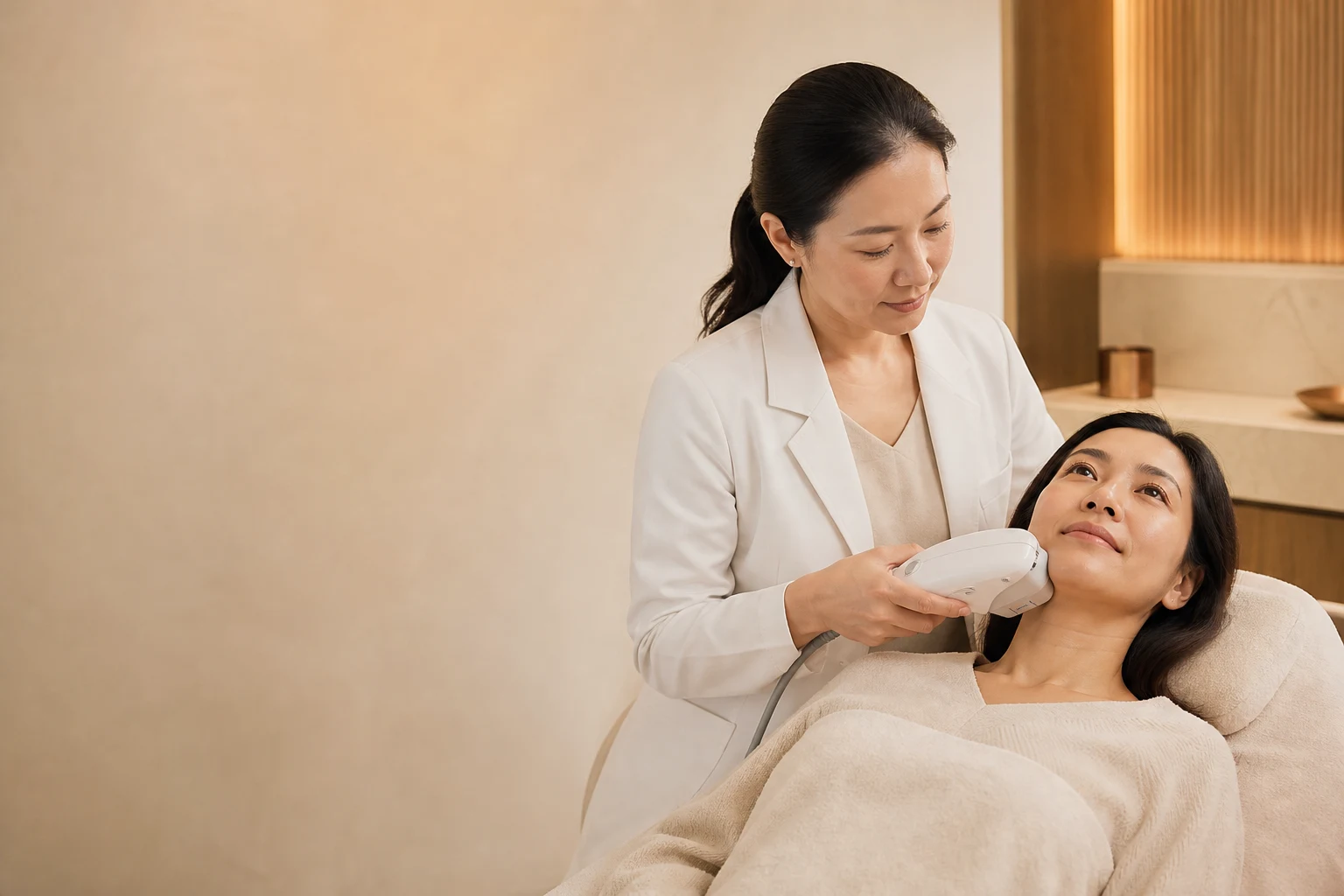
Focused ultrasound · Singapore
Focused ultrasound energy reaches the deep layers of the skin without leaving any traces on its surface, for a lifting effect on the face and body.
Focused ultrasound beneath the surface, to lift without incisions.
HIFU (high-intensity focused ultrasound) is a non-invasive treatment in which focused ultrasound energy reaches the deep layers of the skin, causing controlled micro-damage without leaving any traces on its surface. This stimulates a deep reconstruction of internal structures, achieving skin tension and elevation for a lifting effect.
HIFU is one of our non-invasive facial and skin aesthetic treatments. Our doctors often combine approaches, planning treatment around the result you want.
Unlike ultrasound imaging, which uses sound waves to create a picture, HIFU concentrates the energy at points beneath the skin.

How it works
HIFU focuses ultrasound energy on precise points in the deep layers of the skin. The heat creates controlled micro-damage while the surface stays intact. As these points heal, the deeper structures rebuild, tightening the skin and giving a gradual lifting effect.
Ultrasound focused beneath the surface
Ultrasound waves pass through the skin and converge at focal points at a selected depth, so the energy is concentrated where treatment is planned.
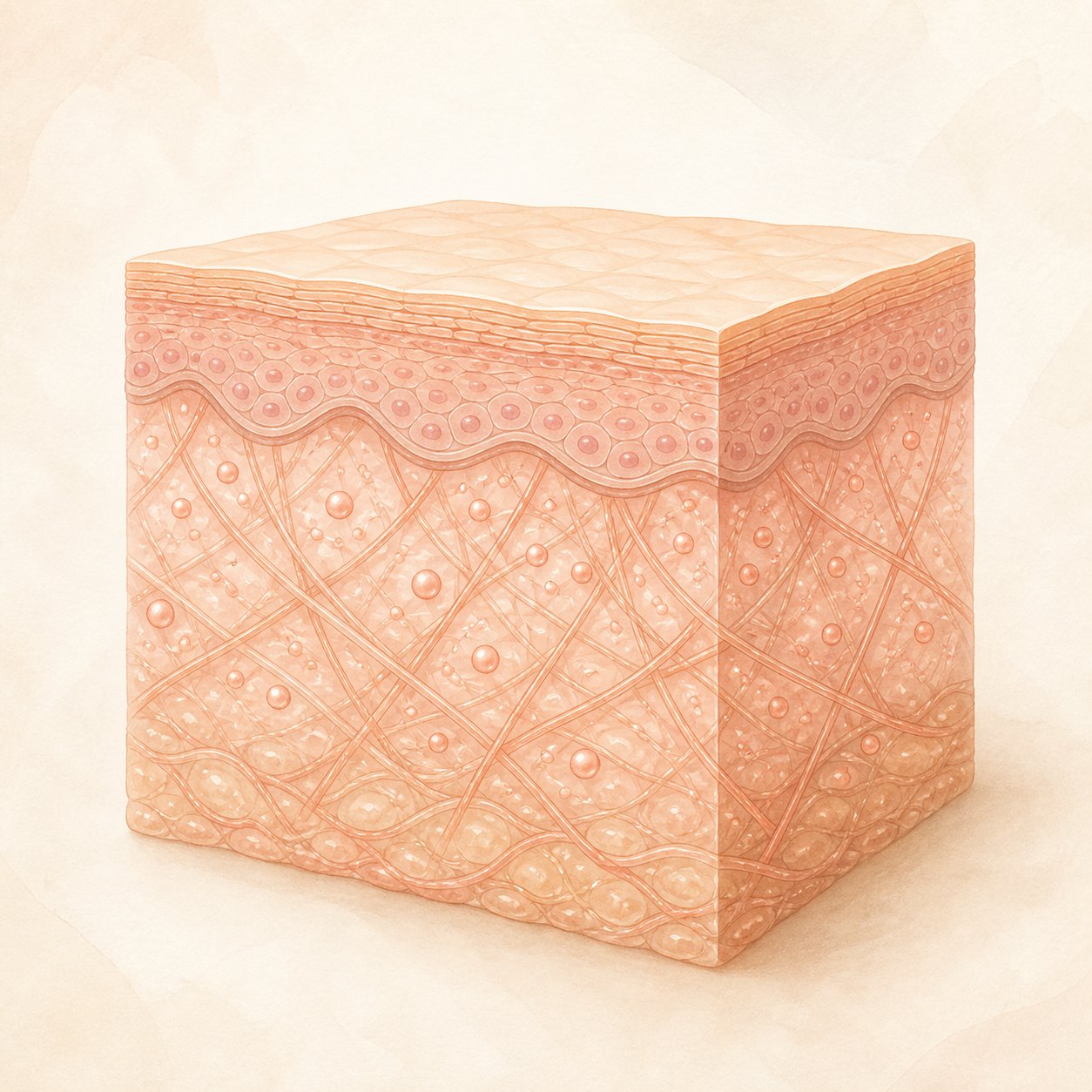
Controlled micro-damage, no surface trace
At each focal point the tissue is heated to create controlled micro-damage, without leaving any traces on the surface of the skin.
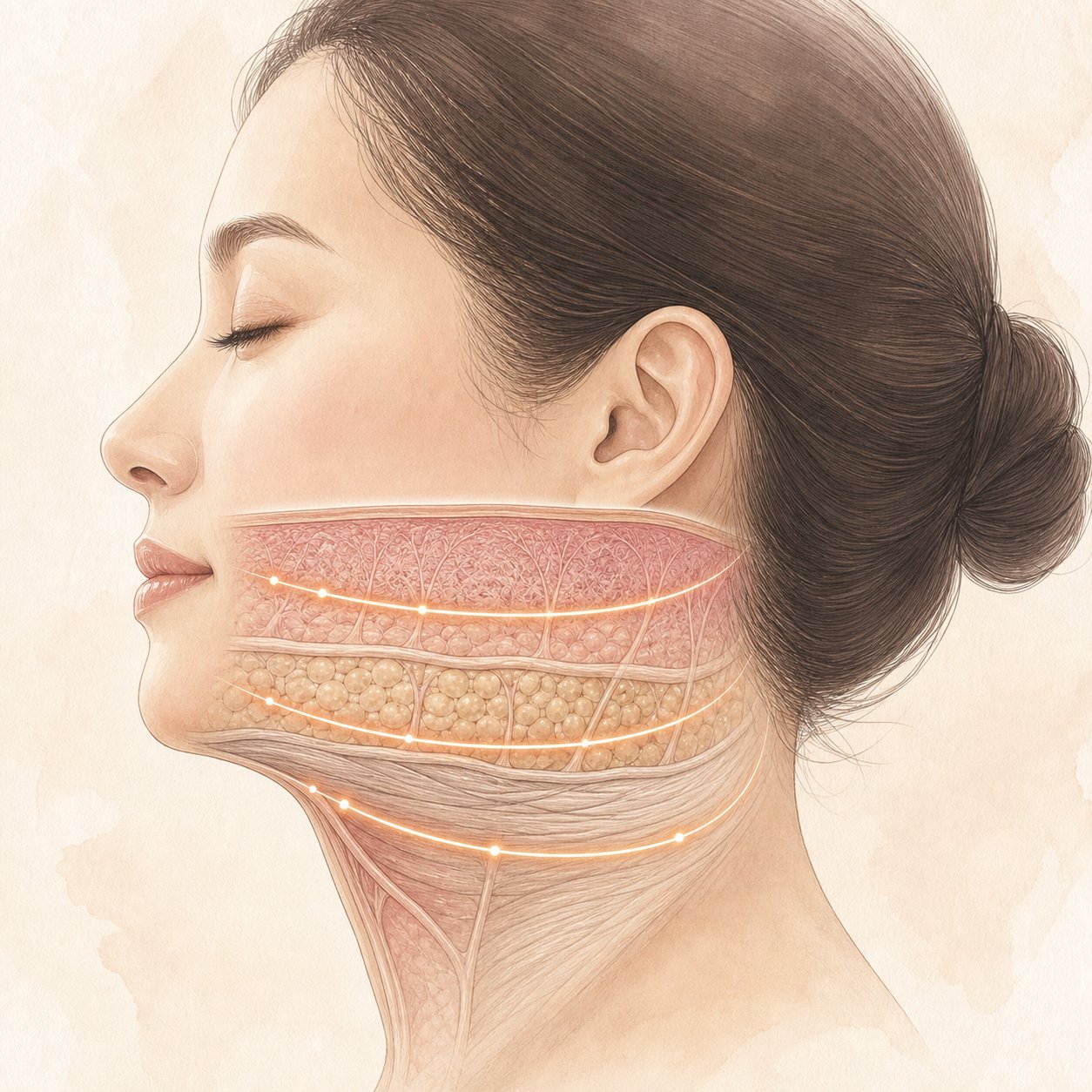
A deep rebuild for a lifting effect
As the treated points heal, the internal structures are rebuilt, which increases skin tension and gives a lifting effect that develops gradually.

Facial definition and body sculpting
On the face, HIFU treats the double chin, lower-face definition and the delicate areas around the eyes. On the body, it targets fat layers and skin tightening on the tummy and love handles.
Treatment areas
HIFU can be used on the face and on the body. Your doctor assesses the area, your skin and your goals to decide whether HIFU is the right option for you.
Pregnant, or have an infection or implant in the area? Tell your doctor first.

Used to treat a double chin and lower-face definition.

Treats the delicate areas around the eyes to smooth out fine lines and lift.
Targets both the elimination of fat layers and the tightening of skin, aiming for a more sculpted, streamlined body.

Your treatment journey
Your doctor reviews your concern, medical history and the areas you want treated, and whether HIFU is the right option for you.
The treatment area is cleansed and ultrasound gel is applied so the energy can pass into the skin.
The handpiece is moved over the planned area. Allow 30 minutes for the lower face and double chin, and about 45 for a full face.
The lifting effect develops gradually as internal structures rebuild. Your doctor explains aftercare and when to review.
Safety & expectations
The lifting effect builds gradually as the deeper structures rebuild.
HIFU works beneath an intact skin surface, but it is not suitable for everyone. Tell your doctor if you are pregnant, or have a skin infection, an implant or a recent treatment in the area.
HIFU treatment uses high-intensity focused ultrasound to lift and tighten the skin without surgery. The energy passes through the skin surface and concentrates at set depths, creating controlled micro-damage that stimulates the deeper structures to rebuild. At Fusion Medical, HIFU is used on the double chin, lower face and around the eyes, and on the tummy and love handles.
HIFU can treat the double chin and improve lower-face definition. It also treats the delicate areas around the eyes to smooth out fine lines and lift. On the body, HIFU targets both the elimination of fat layers and the tightening of skin on the tummy and love handles, aiming for a more sculpted, streamlined body.
The duration of a HIFU procedure varies depending on the areas to be treated. The lower face and double chin can be treated in 30 minutes, while a full-face treatment takes about 45 minutes. A midsection body treatment takes about 30 minutes in total. Do discuss with your doctor whether this treatment is the right option for you.
HIFU uses focused ultrasound energy, and ultrasound has been used in medical imaging for over 50 years. Like any medical procedure, HIFU can have side effects, so your doctor reviews your medical history and the treatment area before recommending it, and explains what to expect during and after your session.
Most people tolerate HIFU well. You may notice warmth or a tingling sensation as the focused energy is delivered beneath the skin, and sensitivity varies between people and areas. If anything feels uncomfortable during the treatment, tell your doctor straight away so the settings can be checked.
HIFU (high-intensity focused ultrasound) is the name of the technology. Ultherapy also uses high-intensity focused ultrasound, and adds real-time ultrasound imaging so the doctor can see which tissue layer receives the energy. Ultherapy PRIME builds on Ultherapy with clearer imaging and more refined energy for delicate areas. Your doctor will explain which option suits your concern and goals.
HIFU treatment works by stimulating a deep reconstruction of the skin's internal structures, so the lifting effect develops gradually rather than all at once. How soon you notice a change, and how much, varies with the area treated and your skin. Your doctor will explain what to expect from your treatment plan.
HIFU does not break the skin, so most people return to their usual activities soon after treatment. Some redness, swelling, tingling or tenderness can occur and usually settles. Bruising and burns are uncommon but possible. Your doctor will explain aftercare and what to watch for after your HIFU treatment.
Doctor-led care

Appointments
Book a consultation to discuss your face or body concern and the areas HIFU treatment can address.