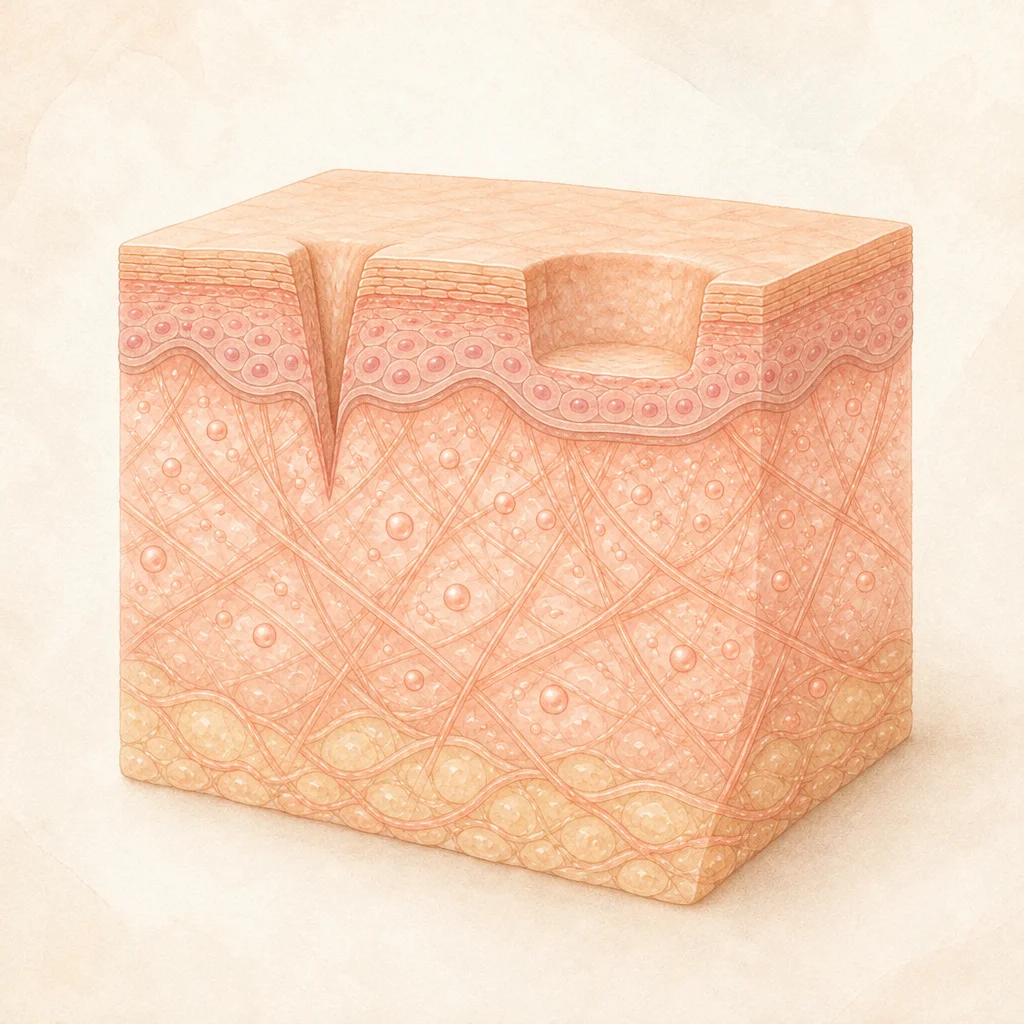
Ice pick and boxcar scars
Ice pick scars have a narrow opening but are often deep acne scars in the skin. Boxcar scars are wider, round or oval depressions with sharp, well-defined edges; they can be shallow or deep.


Acne scars · Singapore
Ice pick, boxcar, rolling and raised scars, and the red or dark marks acne leaves, each respond to different treatments. Our doctors identify yours first.
Different scars, different treatments, matched to each type.
Acne scar treatment aims to remodel skin that acne has damaged, stimulating new collagen to soften depressions and even out texture. Because every person has a different combination of scars and marks, treatment is matched to each type, and a combination of treatments is often required.
Battling acne and emerging from the days of inflamed skin may feel like a battle won, but the scars that remain can be another frustrating reminder, and having acne scars can be a mentally draining and emotional affair.
Acne scars typically occur as lasting depressions or indentations in the skin, and can sometimes be elevated; either way they change the skin's texture. They are often a result of the inflammation your skin undergoes when acne forms: the inflammatory process damages tissue, and the scar left in the dermis is often contracted or lacks enough collagen fibres, leaving an irregularity or depression. Picking or popping pimples often makes them worse.

Types of acne scars
Not all acne scars are the same. Depressed (atrophic) scars include ice pick, boxcar and rolling scars; raised scars are hypertrophic or keloid. Red and dark acne marks are not scars but colour changes that usually fade. It is common to have a combination, and each type needs a different approach.
Ice pick and boxcar scars
Ice pick scars have a narrow opening but are often deep acne scars in the skin. Boxcar scars are wider, round or oval depressions with sharp, well-defined edges; they can be shallow or deep.
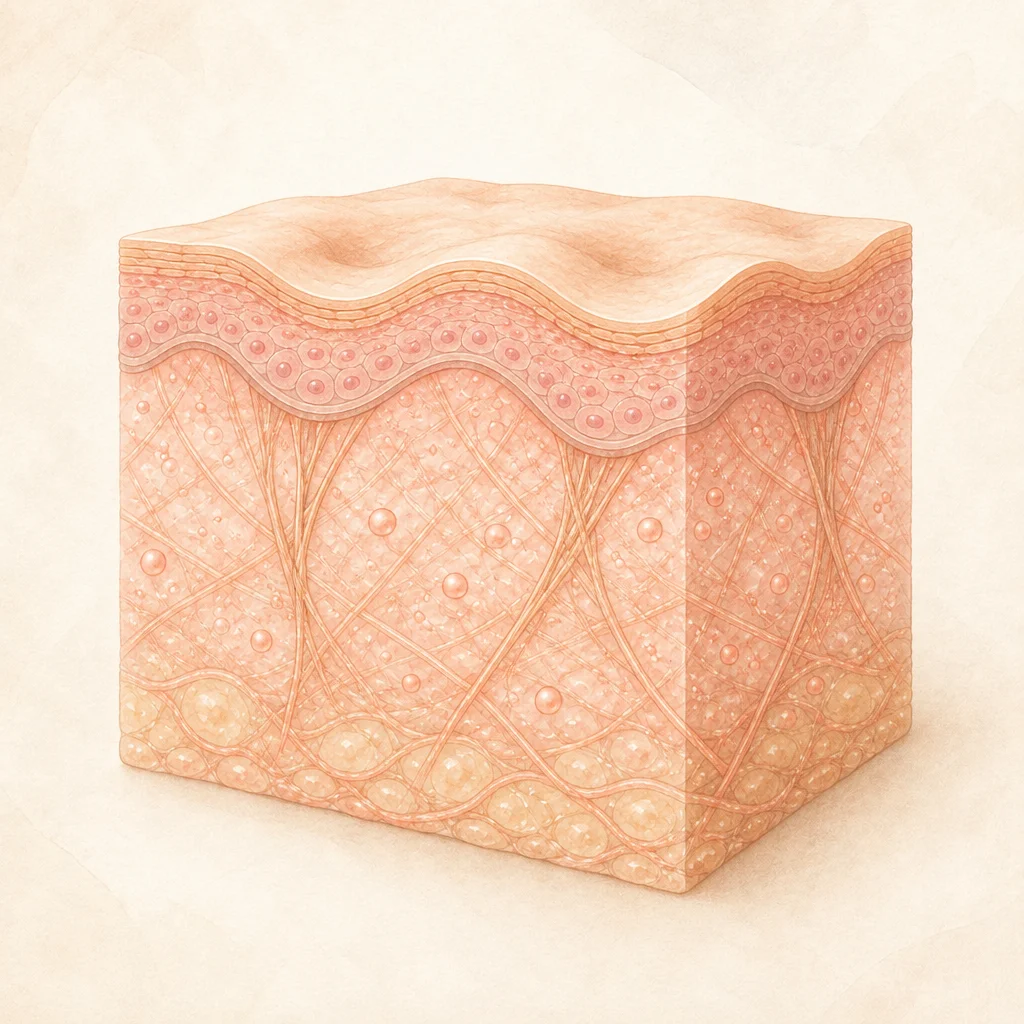
Rolling (atrophic) scars
Rolling scars appear as broader depressions. These scars don't have well-defined edges but rather often have rounded or sloping edges, giving the skin an uneven, wave-like surface.
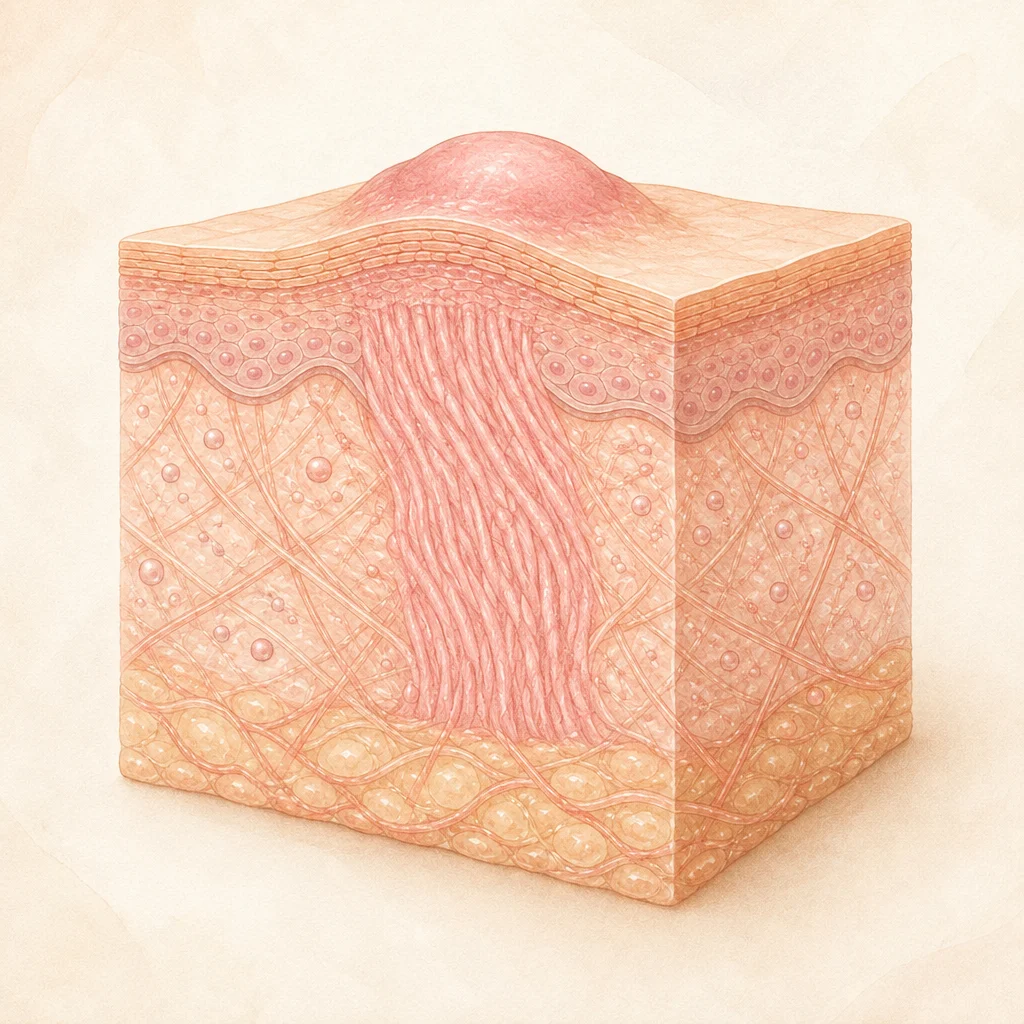
Hypertrophic and keloid scars
These scars are elevated, appearing as lumpy scars that remain after acne has healed. After the skin is inflamed, fibrous scar tissue forms over the wound to repair it; sometimes this tissue grows excessively, leaving a raised bump over the original wound. Hypertrophic scars stay within the original spot, while keloids grow beyond it; both are more common on the jawline, chest, shoulders and back.
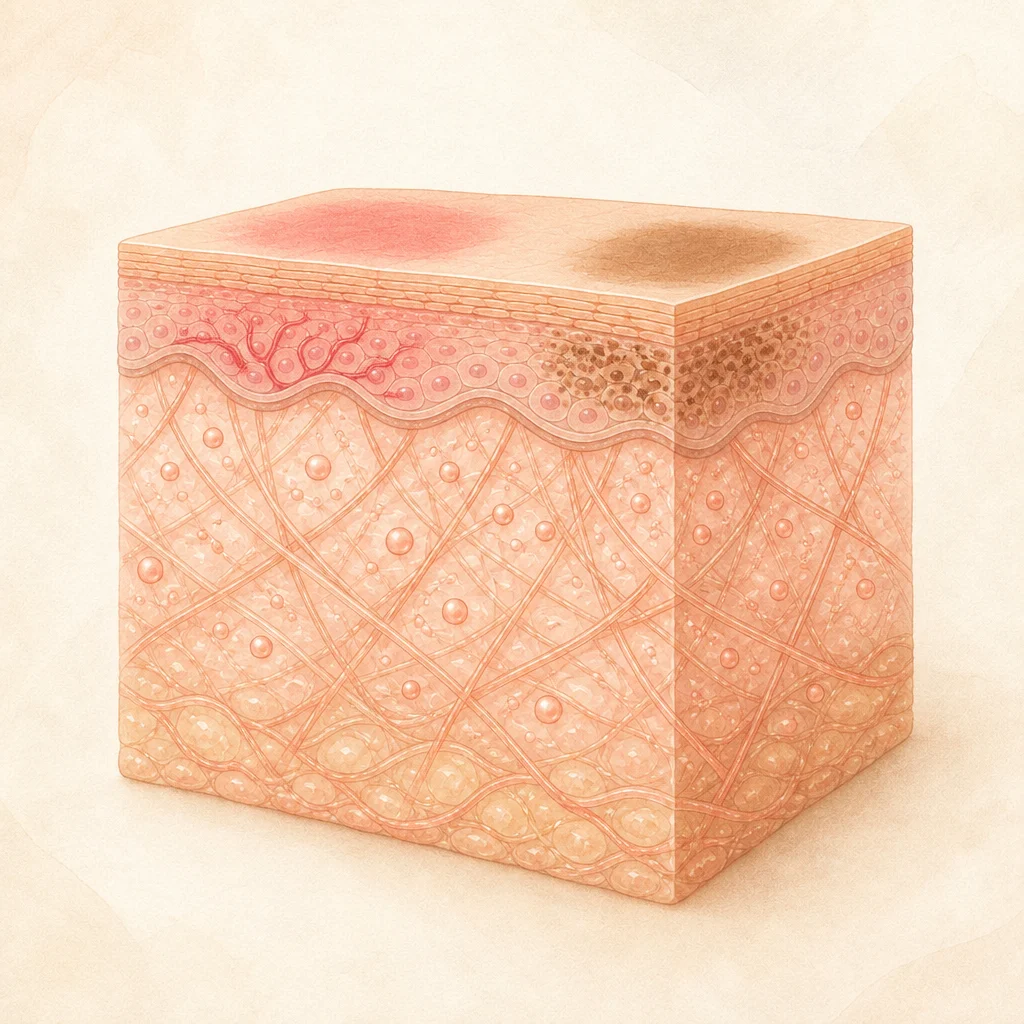
Red and dark acne marks (PIE and PIH)
Post-inflammatory erythema (PIE) appears as pink or red marks, from dilated or damaged capillaries near the surface after a severe outbreak. Post-inflammatory hyperpigmentation (PIH) is often seen as dark spots after acne has resolved, which can be pink, red, brown or black. Both usually fade, though they can last for weeks or months.
Matched to your scars
Depending on the type of acne scars, different treatments may suit you, and a combination is often required. Our doctors look at the depth, shape and colour of each scar, then choose from the treatments below, planned around your skin and downtime.
Taking isotretinoin, prone to cold sores or keloids? Tell your doctor first.
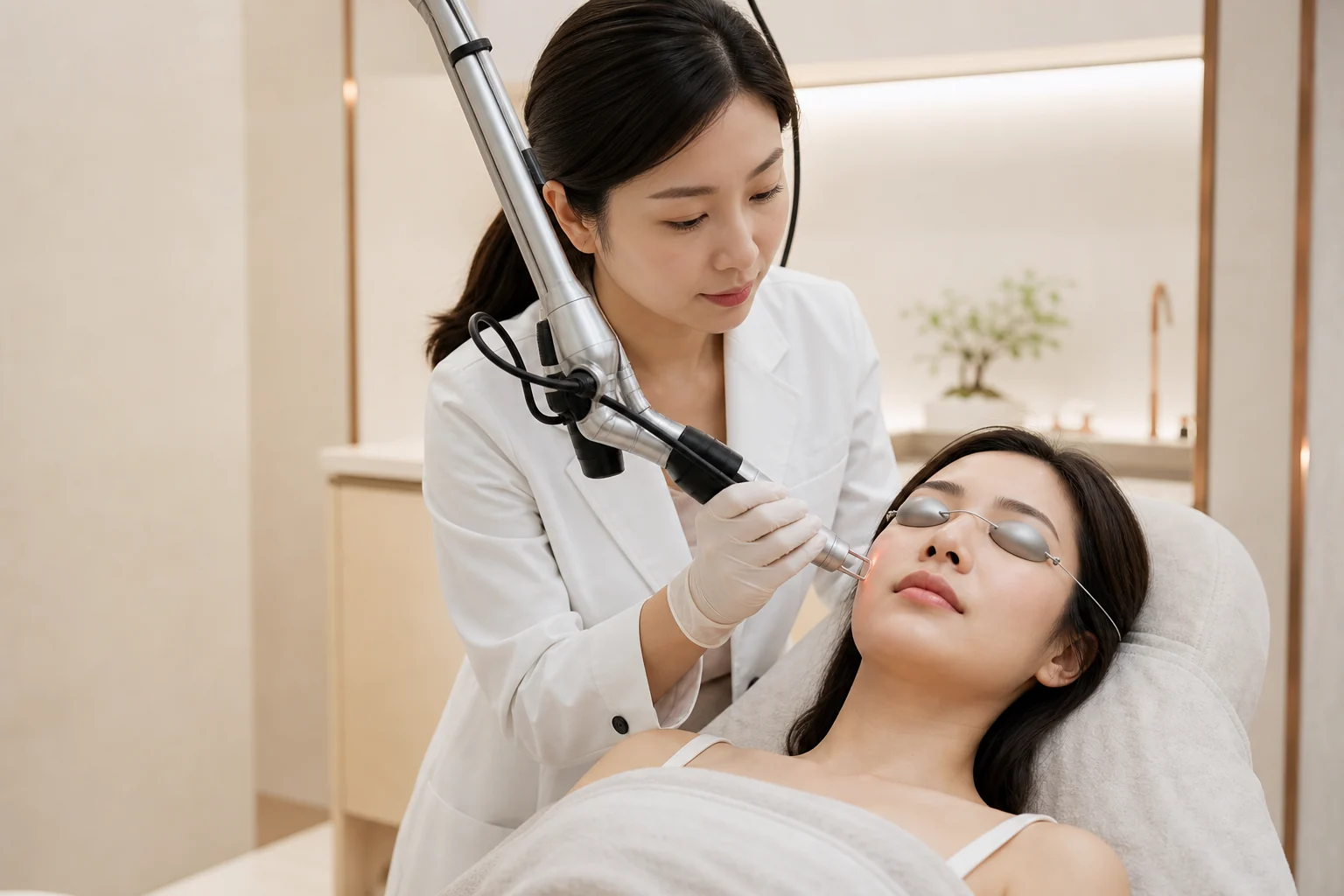
Er:YAG fractional resurfacing and Nd:YAG dermal stimulation can soften rolling and shallow boxcar scars and improve overall skin evenness.
By creating controlled micro-injuries, radiofrequency microneedling seeks to stimulate natural wound healing and new collagen, breaking down scar tissue in the treated area.
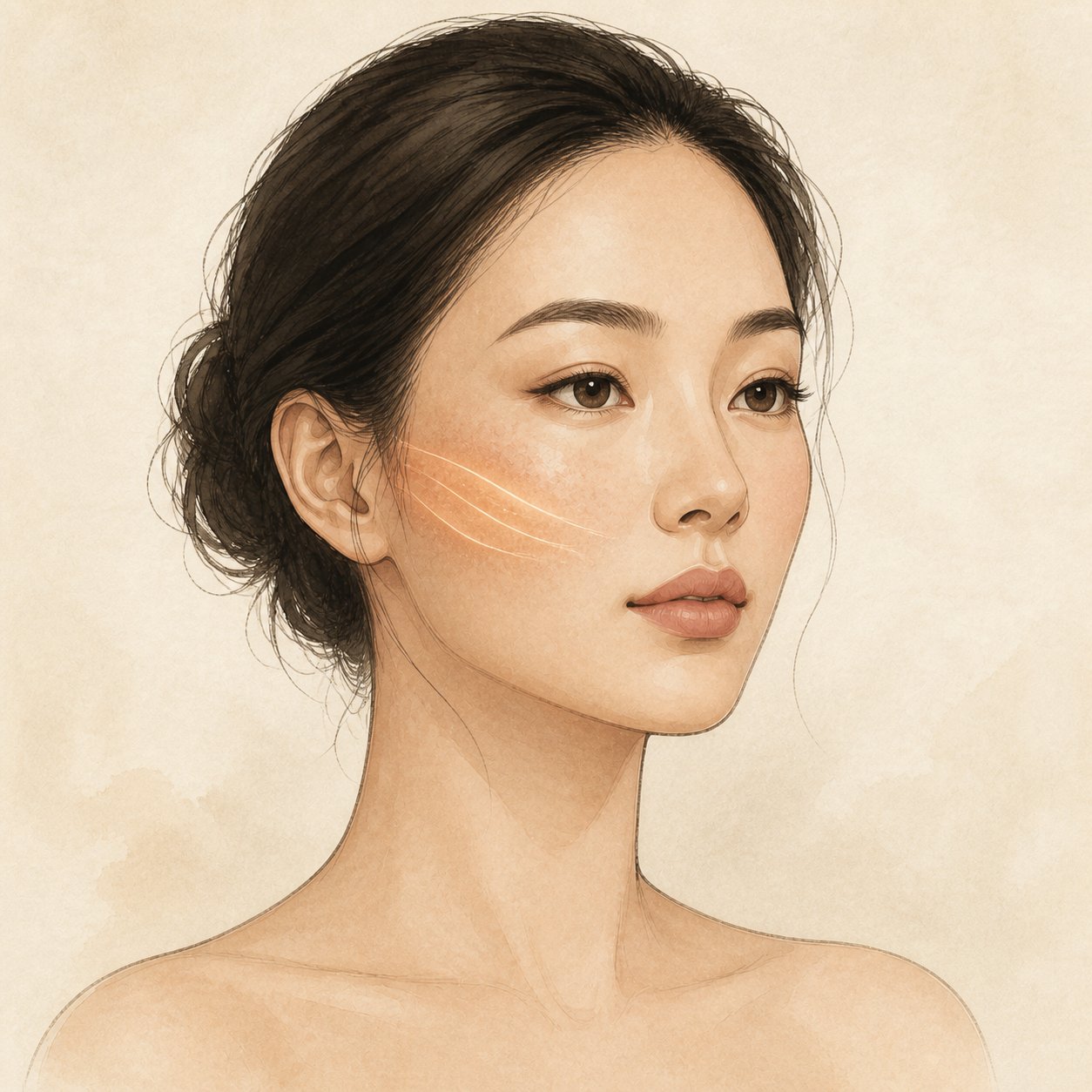
PicoSure's Focus Lens Array concentrates energy into tiny points, creating micro-injuries that promote new collagen and elastin, helping to improve the look of acne scars and texture.
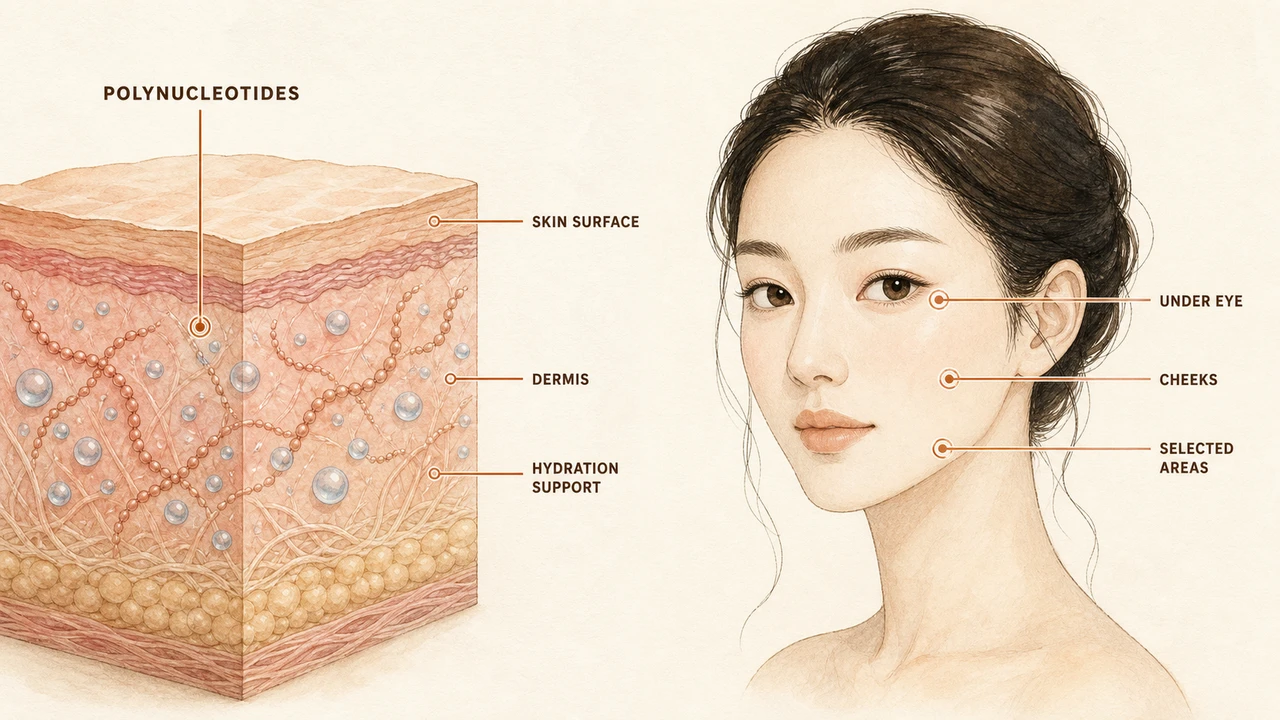
Polynucleotides help regenerate fibroblasts and collagen to repair damaged skin and improve texture, usually as part of a combined plan.
Dark marks (post-inflammatory hyperpigmentation) often fade with time and sun protection. For marks that linger, your doctor may discuss options after an assessment, including tranexamic acid, a prescription medicine.
Your treatment journey
Tell the doctor about your acne history, any active breakouts, previous scar treatments, medicines such as isotretinoin, and how much downtime you can manage.
The doctor examines your skin in different light to map each scar (ice pick, boxcar, rolling or raised) and to separate lasting scars from red or dark marks that may fade.
You agree a plan, often combining laser resurfacing, RF microneedling and PN or PDRN injectables, with the number of sessions and the downtime set out.
Collagen remodelling takes time, so results build gradually over months. Your doctor reviews progress between sessions and adjusts the plan to your skin.
Safety & expectations
Results vary, since every individual has different acne scars, skin conditions and genetics.
Redness, swelling or crusting can follow resurfacing and microneedling, and settle with proper aftercare. Tell your doctor about active acne, cold sores, a tendency to keloid scarring, isotretinoin and any recent tanning before treatment.
Acne scars are often a result of the inflammation your skin undergoes when acne forms. The inflammatory process damages tissue, and the scar left behind in the deep layer of the skin, the dermis, is often contracted or lacks enough collagen fibres, leaving an irregularity or depression. Scars are often worsened if you pick or pop your pimples.
By their width, depth and edges. Ice pick scars are narrow but often deep; boxcar scars are round or oval depressions with sharp edges; rolling scars are broader, with sloping edges that make the skin look wavy. Raised scars are hypertrophic or keloid, and flat red or dark marks are not scars at all. According to the American Academy of Dermatology, most people with acne scars have more than one type, so a doctor's examination helps.
It depends on the type. Some shallower scars or marks may fade over time, and over-the-counter topical creams can help them fade faster. However, deep acne scars such as ice pick or rolling scars generally do not go away on their own and need laser or other acne scar treatments. Your doctor can advise which treatment suits the scars you have.
Acne marks are flat colour changes that usually fade, while acne scars change the texture of the skin. Scars are lasting depressions or elevations, from shallow to deep, such as ice pick, boxcar, rolling or keloid scars. Marks, the red (PIE) or dark (PIH) spots after a breakout, are often mistaken for scarring because of their discolouration and redness; they can be stubborn for weeks or months, and treatment can shorten this.
Deep acne scars, such as ice pick and rolling scars, usually need a combination: laser resurfacing to smooth the surface, radiofrequency microneedling to remodel collagen beneath, and sometimes injectables to support repair. We offer subcision to release tethered rolling scars; deep, narrow ice pick scars may need techniques that treat each scar individually, which your doctor can discuss or refer you for. Expect a course of sessions spaced weeks apart, as new collagen builds gradually.
Acne scars can usually be softened rather than erased, and acne scar treatment in Singapore is matched to the scar type. Laser treatments such as picosecond laser or Fotona may suit you, and RF microneedling and PN or PDRN injectables stimulate collagen; a combination is often required. We also offer chemical peels, which fade scars by smoothing the surface of the skin; the choice of peel depends on the type and severity of the scar, your skin tone and sensitivity.
Results vary, since every individual has different acne scars, skin conditions and genetics, and improvement builds over a course of sessions. Downtime depends on the treatment: light laser resurfacing may cause 1–3 days of redness and deeper sessions around a week of healing, while RF microneedling usually causes redness and swelling for a short time.
Acne scars generally stem from inflammatory acne, so the key to prevention is treating the root of the problem early. Acne can sometimes be managed with home remedies and over-the-counter medication, but if it has not resolved after months, see a doctor. Early intervention for your acne can help prevent scars from forming and reduce the need for acne scar treatment later.
Doctor-led care
Appointments
Book a consultation and our doctors will assess your scars and marks and plan acne scar treatment around your skin condition, genetics and medical history.