

Fewer signals for excess melanin
TXA reduces the signals that tell pigment cells to produce excess melanin, and may inhibit UV-induced plasmin activity.



Melasma & pigmentation · Singapore
Tranexamic acid (TXA) helps with stubborn pigmentation and uneven skin tone. Given as microinjections, it targets pigment more directly; mild redness or tiny bumps may last 1–2 days.
Tranexamic acid, delivered into the skin, for uneven pigment.
A tranexamic acid injection delivers small amounts of TXA into the superficial layers of the skin to target pigmentation more directly. Tranexamic acid has been shown to reduce the appearance of dark spots and pigmentation, with an overall brightening effect on uneven skin tone.
Pigmentation happens when your skin produces too much melanin. It can be triggered by sun exposure, hormones, inflammation or injury, and can affect the cheeks, chin, forehead, nose and upper lip. Because it is difficult to conceal, many people feel self-conscious about it.
Tranexamic acid, often called TXA, is used for stubborn pigmentation and uneven skin tone. It can be used to treat pigmentation and melasma orally, topically or by injection. Its effect may be due to its ability to inhibit UV-induced plasmin activity and suppress melanin production.
Because TXA regulates melanin production indirectly, it does not whiten the skin. It should be used appropriately and only after a proper medical assessment.
How it works
Tranexamic acid calms the inflammation that leads to darkening of the skin and reduces the signals that tell pigment cells to produce excess melanin. Over time, this supports a more even distribution of pigment. Its effect may come from inhibiting UV-induced plasmin activity.
Fewer signals for excess melanin
TXA reduces the signals that tell pigment cells to produce excess melanin, and may inhibit UV-induced plasmin activity.

Calms inflammation
It calms the inflammation that leads to darkening of the skin, including pigmentation caused by inflammation, such as acne marks.
A more even distribution of pigment
With inflammation calmed and melanin signals reduced, pigment is gradually spread more evenly. When TXA is used appropriately and with proper medical assessment, patients may notice:

Placed where the pigment is
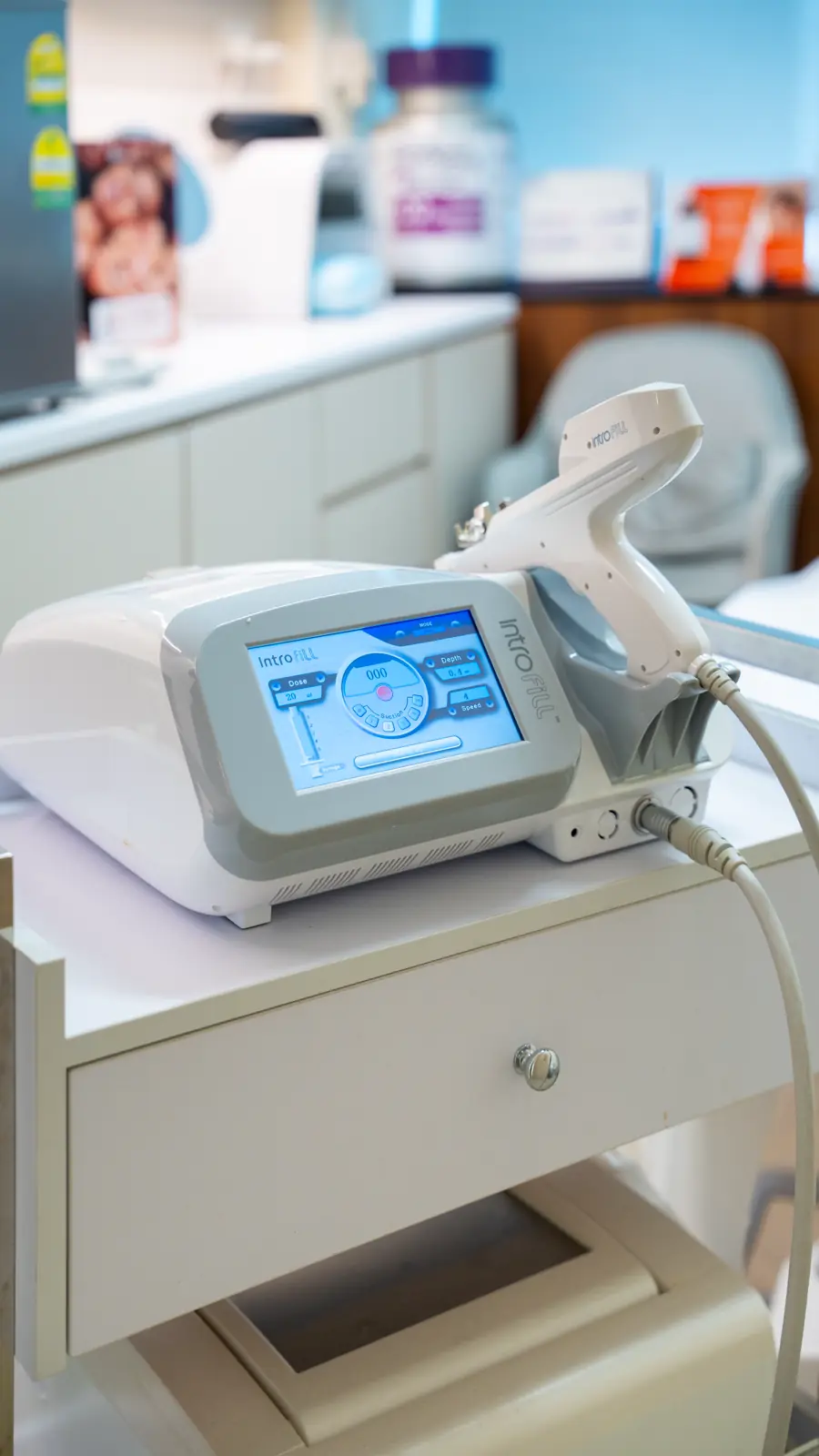
Intradermal TXA delivers small amounts into the superficial layers of the skin, by hand or with an injector gun, to target pigmentation more directly.
Personalised assessment
Tranexamic acid is used for pigmentation driven by excess melanin, from melasma and dark spots to acne marks. Your doctor examines your skin first, because the cause of your pigmentation shapes the treatment plan and whether TXA suits you.
History of blood clots, pregnant or on hormonal medicines? Tell your doctor first.

Stubborn pigmentation that tranexamic acid can treat orally, topically or via injections.
TXA has been shown to reduce the appearance of dark spots, helping lighten them over time.
Post-inflammatory pigmentation, the marks left behind after acne, can improve as inflammation is calmed.
Uneven skin tone, redness or blotchiness, for brighter, more uniform-looking skin.

Your treatment journey
Our doctor examines your pigmentation and reviews your medical history to understand what is causing it and whether TXA suits you.
Depending on your skin, TXA may be topical, oral (low-dose tablets under medical supervision) or intradermal, alone or with lasers or skin boosters.
For intradermal treatment, small amounts of TXA are placed in the superficial layers of the skin by microinjection, by hand or with an injector gun.
Any mild redness or tiny bumps usually settle within 1–2 days. Sun exposure is a common trigger for pigmentation, so protect your skin as it recovers.
Safety & expectations
Pigmentation has many triggers: your doctor assesses your skin before recommending tranexamic acid.
Tranexamic acid is a prescription medicine, and every route starts with a medical assessment. Tell your doctor about any history of blood clots, pregnancy, hormonal medicines or other conditions, and protect your skin from the sun during treatment.
No. Tranexamic acid does not whiten the skin. It regulates melanin production indirectly, calming inflammation and reducing the signals that drive excess pigment, so the aim of a tranexamic acid injection is a brighter, more even tone where there is melasma, dark spots or acne marks.
Tranexamic acid can be used to treat melasma orally, topically or via injections, and it has been shown to reduce the appearance of dark spots and pigmentation. Microinjections target pigmentation more directly. Melasma can recur, so your doctor will also discuss sun protection and whether to combine TXA with lasers or skin boosters.
Depending on your doctor’s recommendation and what suits your skin, tranexamic acid may be applied as a cream or serum, taken as low-dose tablets under medical supervision, or delivered into the superficial layers of the skin as microinjections, by hand or with an injector gun.
Mild redness or tiny bumps may occur for 1–2 days after tranexamic acid microinjections. Topical TXA generally has no downtime, and oral TXA has no downtime but requires monitoring and medical approval from your doctor.
There is no single schedule for everyone. Your doctor plans the number and spacing of tranexamic acid injection sessions around the type of pigmentation, how your skin responds and any treatments it is combined with, and reviews your progress along the way.
Yes. TXA is often part of a broader pigmentation management plan. Depending on your skin, your doctor may combine tranexamic acid with Micro Laser Resurfacing, Pico lasers and/or skin boosters.
Whether longer-term tranexamic acid suits you depends on the route and your health. TXA regulates melanin production indirectly and does not whiten the skin, but it also affects blood clotting, so oral TXA requires monitoring and medical approval. Your doctor reviews your medical history before any form of treatment and keeps your plan under review.
Tranexamic acid affects blood-clotting pathways, so tell your doctor about any personal or family history of blood clots or clotting problems, pregnancy, and hormonal medicines such as the contraceptive pill. Your doctor decides whether any form of TXA is suitable for you after a medical assessment.
Doctor-led care

Appointments
Book a consultation to understand whether tranexamic acid or a combination therapy is suitable for your skin concerns.