Mon-Fri : 8:30am – 5:30pm┃Sat : 8:30am – 1:00pm
wheelock@fusionmedical.com.sg
501 Orchard Rd #04-11, Singapore 238880
Fusion Medical
aesthetic clinic singapore
+65 8802 1542
Have Any Questions?
Fusion Medical
aesthetic clinic singapore
Doctor gently assessing the under-eye area of a patient looking upward

Eye bags · Singapore

Eye bag removal in Singapore, planned around the cause.

Fat bulges, fluid, loose skin and hollows each need a different approach. Our doctors assess the cause first, then plan non-surgical treatment around it.

What does eye bag removal in Singapore involve?

Eye bags have different causes, and the cause decides the treatment.

Eye bag removal aims to reduce the swelling or puffiness under the eyes that can make you look tired and older than you are. Non-surgical options tighten the lower eyelid, lift the surrounding skin or soften the hollow below the bag, but the cause of your eye bags decides which one will help.

Eye bags are mild swelling or puffiness under the eyes. With age, the tissues and muscles that support the eyelids weaken, so the fat that cushions the eyes can move forward into the lower lids, and fluid can collect below them. According to Mayo Clinic, eye bags are usually a cosmetic concern and rarely a sign of a serious medical condition.

Treatment for eye bags once relied largely on blepharoplasty, a surgical procedure involving incisions and repositioning of the fat pads around the eye, with significant downtime and discomfort that can last for weeks. Today, many eye bags can be treated without surgery, avoiding incisions and surgical scars. How well a non-surgical procedure works depends on the severity of your eye bags.

  • Cause first — fat, fluid, loose skin or a hollow below
  • Non-surgical — laser, ultrasound or fillers
  • Delicate area — chosen with the thin skin around the eyes in mind
  • Realistic goals — results depend on how prominent the bags are
Consultation lounge at Fusion Medical with a round table, chairs and orchids
Setting realistic expectations is part of every eye bag consultation.

Causes and types

What causes eye bags?

Eye bags form when the muscles and tissues supporting the eyes weaken, letting fat bulge forward into the lower lid, while fluid can collect beneath the eyes. Ageing, collagen loss, genetics, lack of sleep, stress, allergies, smoking and salty meals all play a part, and they decide which treatment helps.

See how we assess eye bags

Illustrated face with marked points around the eye, cheek and neck

Fat pads and weakened support

Eye bags form when the muscles and tissues that hold back the fat around the eye weaken, so the fat bulges forward into a pouch under the lower lid. Family history plays a part too: some people are genetically predisposed to eye bags that become more prominent as they age.

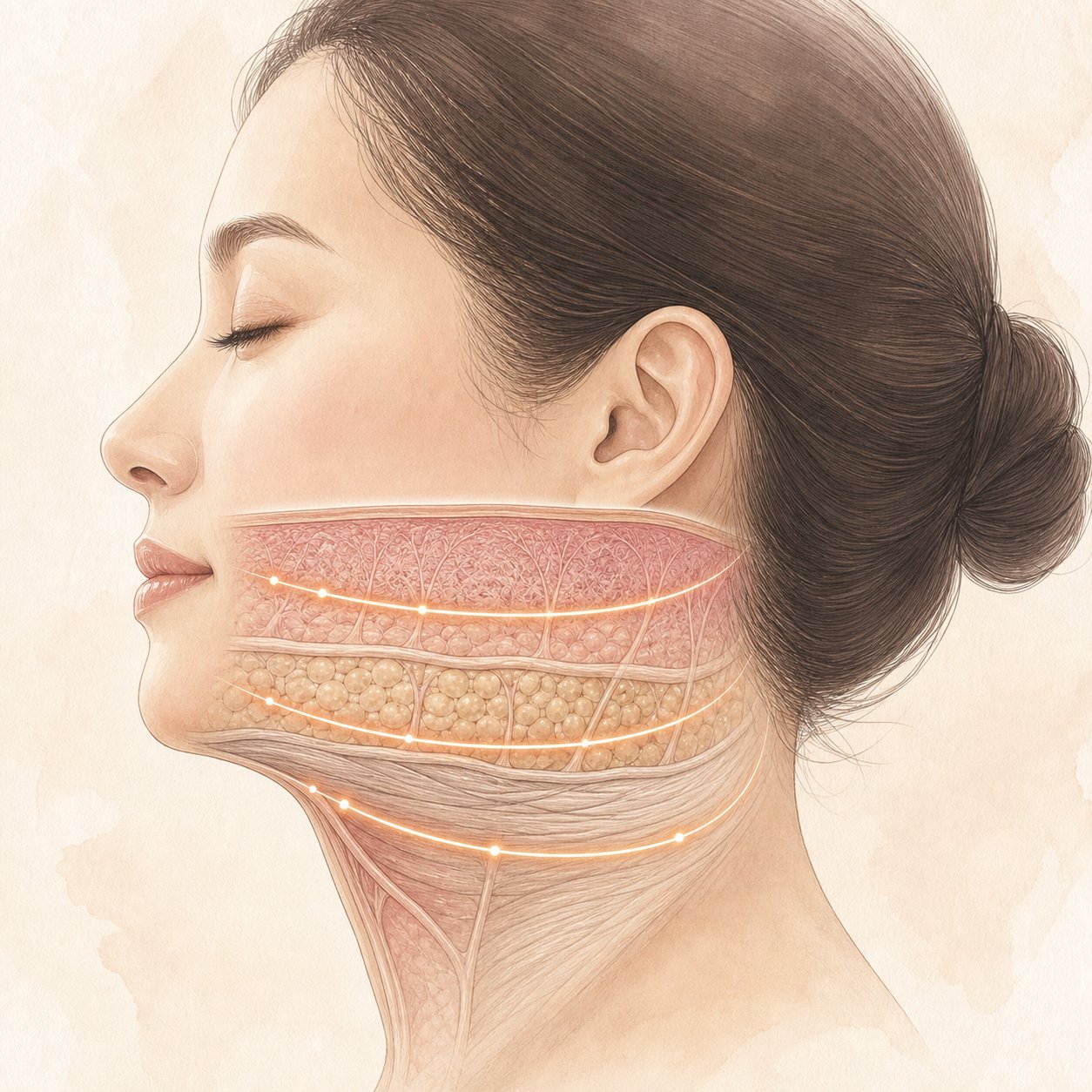
Illustration of a woman's face with light guide lines over the cheeks and jaw

Illustration of a woman's profile showing the layers beneath the skin

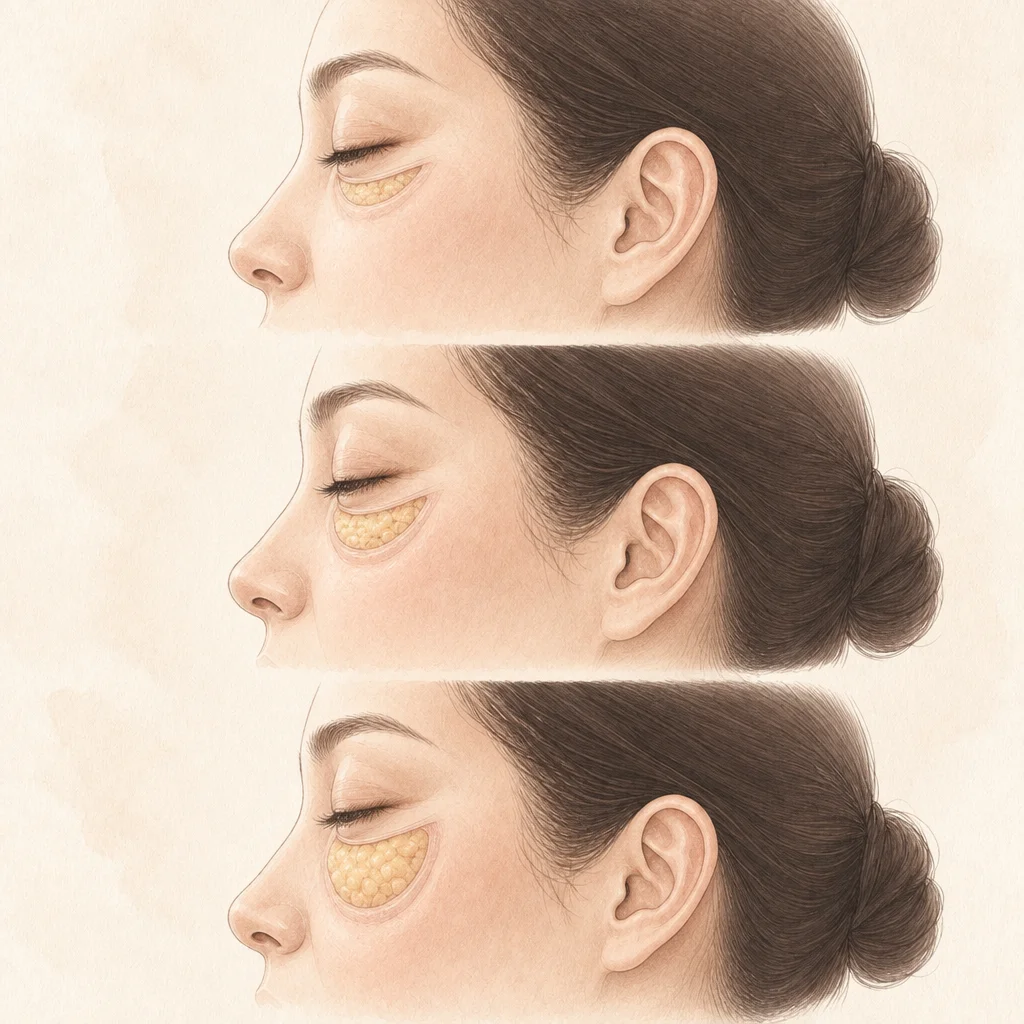
Illustration of three side profiles with a small, medium and large fat pad bulging under the lower eyelid
Eye bag treatment options by cause
Concern Where we usually start thenWhen we look further
Puffiness that comes and goes Enough sleep, less salt, managing allergies and not smoking: fluid-related puffiness often eases. A medical check if swelling is persistent, one-sided or comes with other symptoms, as skin, kidney or thyroid conditions can cause it.
Type 1 bags Fotona laser from inside the lower eyelid, in about 30 minutes. A further Fotona session, or 2–3 maintenance sessions a year for some people.
Type 2 bags Fotona laser, which aims to tighten the lower eyelid and reduce the appearance of the bag. Combining with laser rejuvenation and tightening of the skin around the eyes, with or without dermal fillers.
Type 3 bags A doctor's assessment of how much fat and loose skin are involved. A surgical opinion (lower-eyelid blepharoplasty) if the bags are too large for non-surgical options.
Hollow below the bag Under-eye filler or injectable collagen gel to blend the tear trough. A collagen biostimulator to rebuild collagen gradually over a course.
Loose skin around the eyes RF & Ultrasound Treatment or HIFU to tighten the skin around the eyes. For heavy brows or hooded upper lids, Ultherapy PRIME may be discussed: it is FDA-cleared to lift the eyebrow, not to treat under-eye bags.
Doctor reviewing a facial image on a tablet with a patient, with a laser system behind them
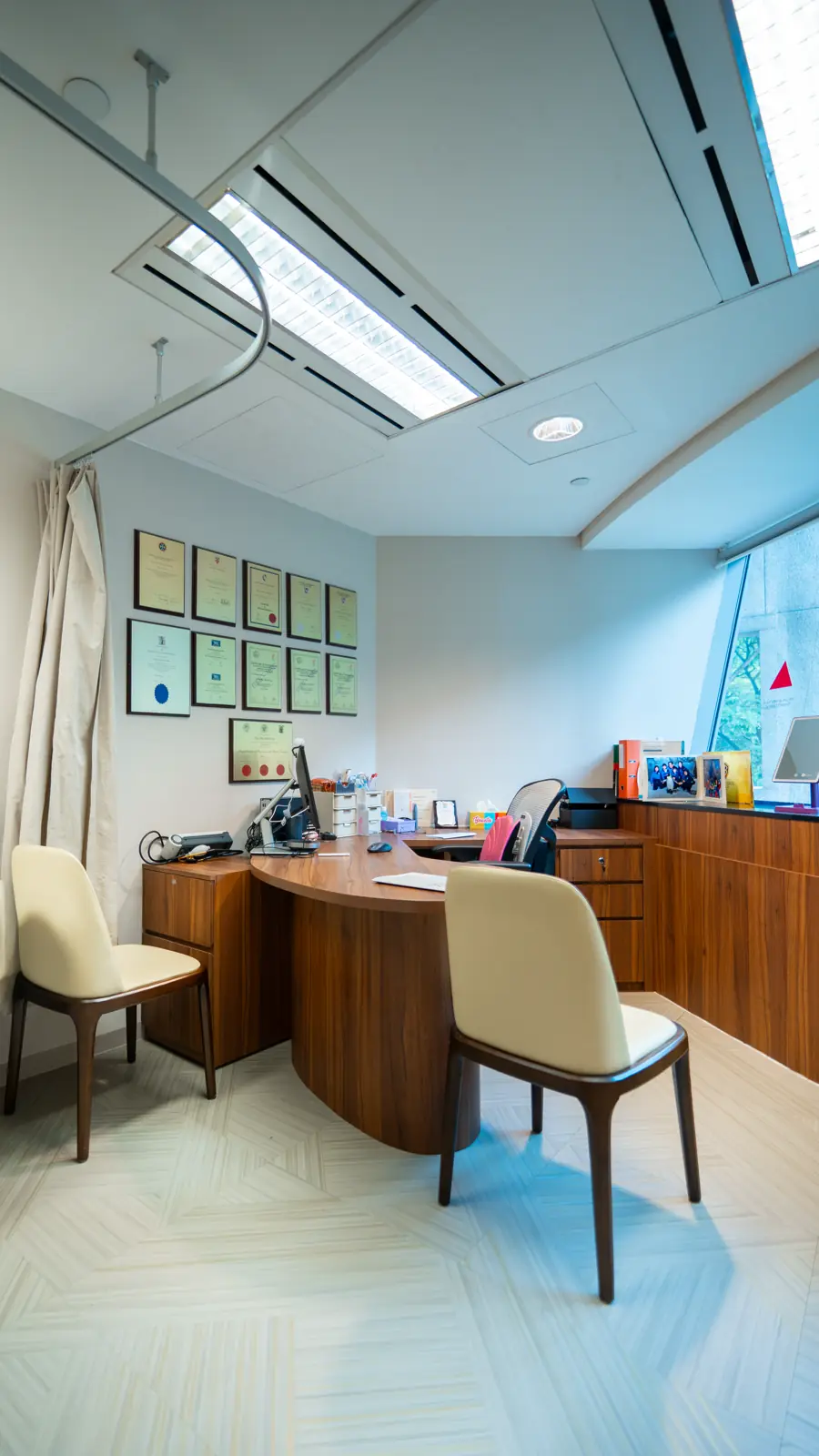
Doctor's consultation room at Fusion Medical, Wheelock Place

Your treatment journey

Find the cause. Grade the bag. Choose with realistic goals.

  1. Consult

    Tell the doctor how long you have had the bags, whether they change through the day, and about allergies, sleep, smoking, glaucoma, blood pressure or thyroid problems.

  2. Assess

    The doctor examines your lower eyelids as you look ahead and upwards, to grade the bags (type 1, 2 or 3) and see how much comes from fat, fluid, loose skin or a hollow below.

  3. Choose

    You agree a plan: Fotona laser, skin tightening with HIFU or RF and ultrasound, or filler, alone or combined, with realistic expectations for your type of eye bag.

  4. Review

    Slight swelling or redness may last a few days. Your doctor reviews the result: some people need only one Fotona session, while others return 2–3 times a year for maintenance.

From our doctors

Why do eye bags need more than one approach?

In these short videos, our team explains that puffy eye bags and dark circles rarely have a single cause, why the eye area tends to look tired first, and why the cause is assessed before treatments around the eyes are combined.

Puffy eye bags and dark circles: why we assess the cause first
Why the eye area looks tired first, and the options for treating it

Safety & expectations

Setting realistic expectations and choosing a trained doctor matter as much as the treatment itself.

Non-surgical eye bag procedures avoid incisions, but slight swelling, redness or bruising can occur for a few days. Tell your doctor about eye conditions such as glaucoma, high blood pressure, thyroid problems, allergies and any previous eye treatments.

Eye Bag Removal: frequently asked questions

Are eye bags genetic?

They can be. Family history plays a part, and some people are genetically predisposed to eye bags that appear early and become more prominent with age, even with enough sleep. Other factors add to it: ageing and collagen loss let the fat around the eye bulge forward, while lack of sleep, stress, allergies, smoking and salty meals can make puffiness worse.

Can eye bag removal be done without surgery?

Often, yes. Non-surgical options for eye bag removal in Singapore at our clinic include Fotona laser from inside the lower eyelid, HIFU or RF and ultrasound to tighten the surrounding skin, and under-eye fillers, which avoid incisions and surgical scars. How well they work depends on the severity of your eye bags; very large bags may need a surgical opinion.

What is 4D (Fotona) eye bag removal?

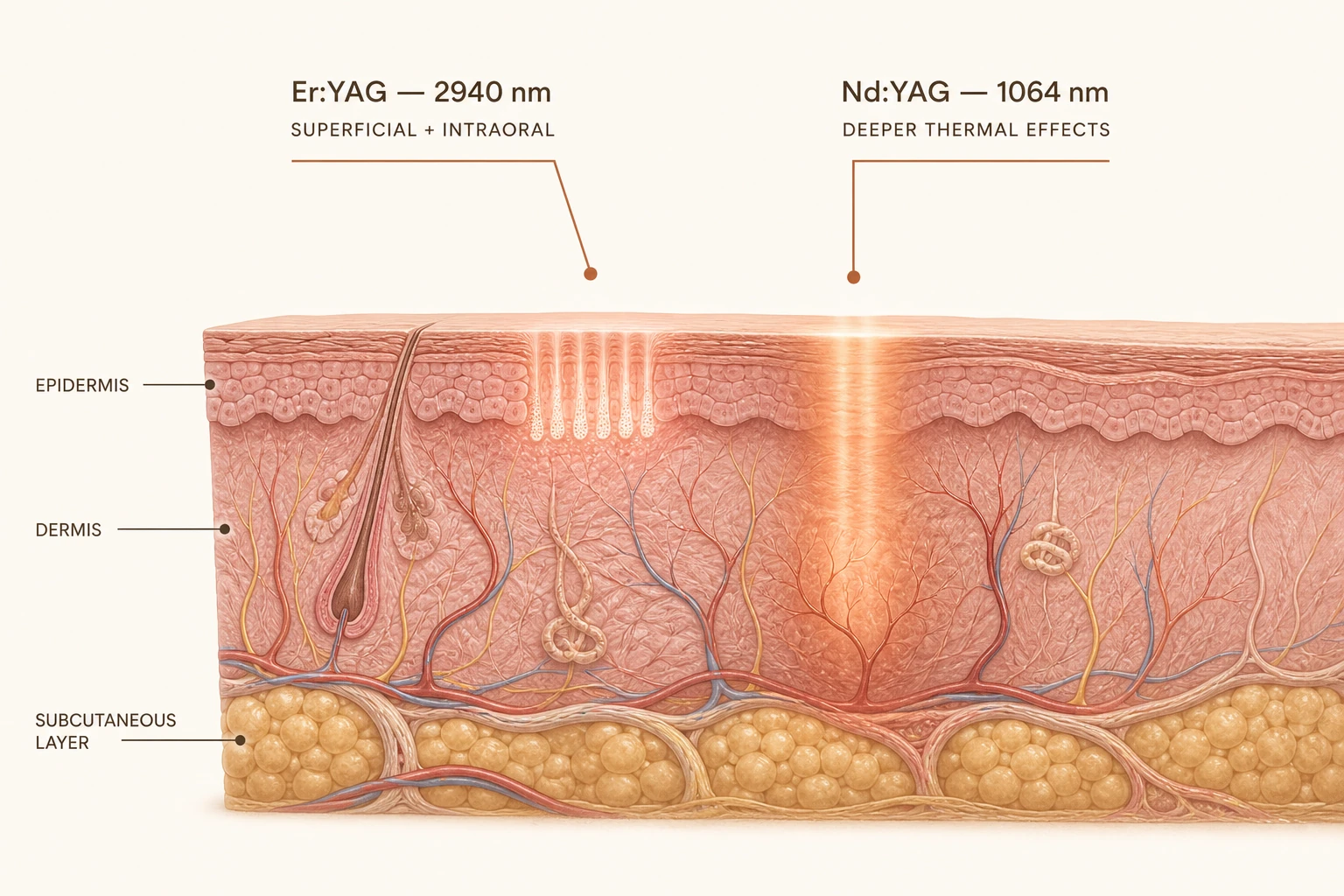
It is a non-surgical laser treatment using two lasers: a collagen-stimulating laser applied from inside the lower eyelid with a fractional non-ablative handpiece, and a gentle skin-resurfacing laser. They heat the deeper layers to about 42–45°C, contracting collagen and stimulating fibroblasts to help firm and tighten the skin around the eyes. Anaesthetic eye drops and eye shields are used, and it takes about 30 minutes. The same Fotona laser platform is used for the full-face Fotona 4D treatment.

How can I reduce under-eye puffiness at home?

Puffiness from fluid often improves with enough sleep, less salt, managing allergies, not smoking and sleeping with your head slightly raised; a cool compress can help in the morning. Home remedies have little effect on eye bags caused by fat or loose skin, so if puffiness is there throughout the day, a doctor can assess whether treatment would help.

Do fillers work for eye bags?

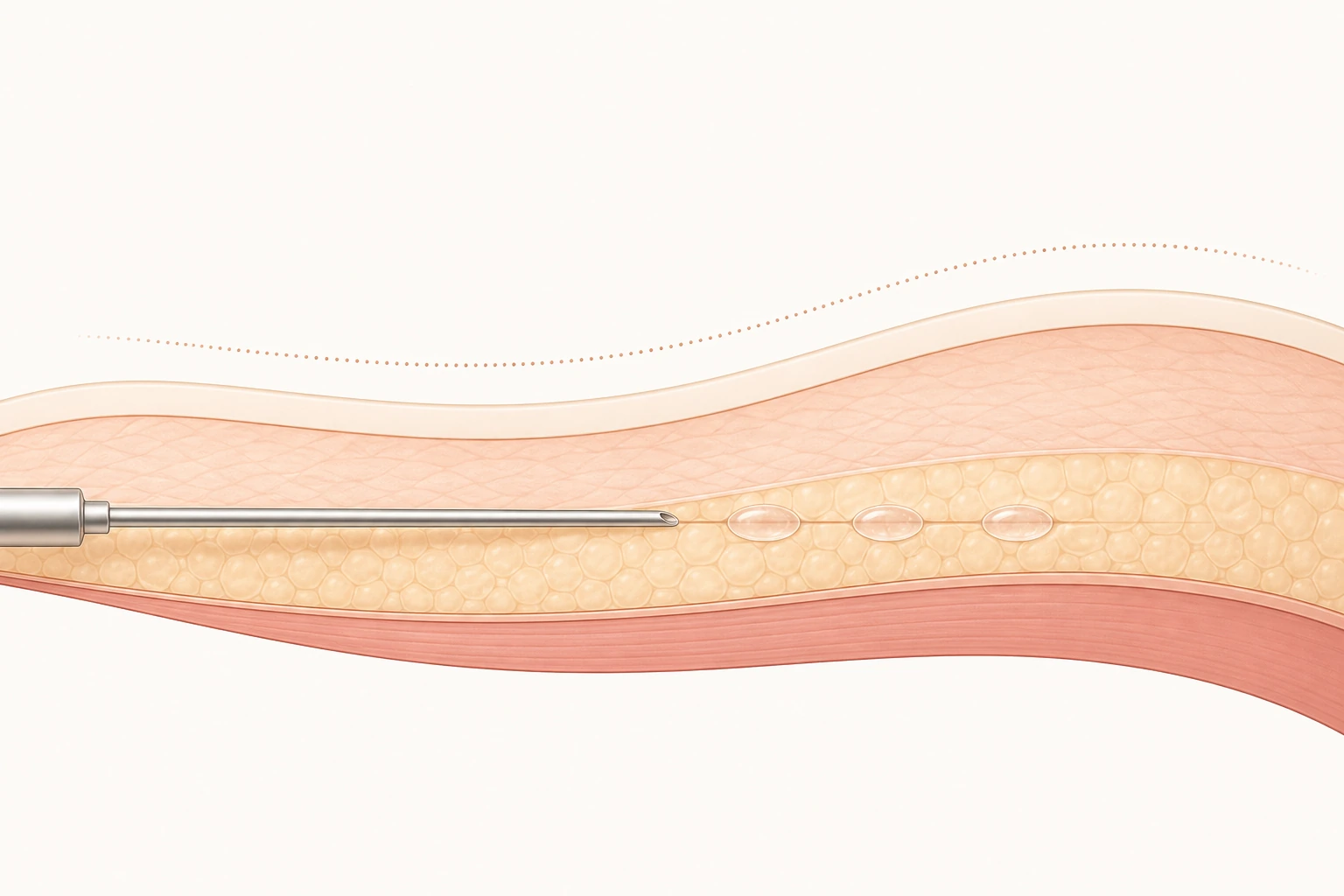
Dermal fillers do not remove the fat in an eye bag. Instead, a gel-like filler injected under the eyes can plump up the area and reduce the appearance of bags by filling the hollow below them. Dermal fillers can also address other signs of ageing around the eyes, such as hollowing or dark circles. Your doctor checks whether a filler suits your type of eye bag.

How many eye bag treatment sessions will I need?

For Fotona, some patients need only 1 session, while others need 2–3 maintenance sessions a year. For better results, your doctor may combine treatment with laser rejuvenation and tightening of the skin around the eyes, with or without dermal fillers.

Is eye bag treatment painful, and is there downtime?

There is minimal discomfort with Fotona eye bag treatment, which uses anaesthetic eye drops and eye shields. It is minimally invasive, with little to no downtime: usually slight swelling and redness for a few days, if any. Your doctor will explain what to expect from any other treatment in your plan.

Can eye bags be a sign of a medical problem?

Eye bags are usually a cosmetic concern and rarely a sign of a serious condition. However, swelling around the eyes can be linked to dermatitis, dermatomyositis, kidney (renal) disease or thyroid eye disease. See a doctor if the swelling is sudden, affects one side only, is painful, red or itchy, or comes with other symptoms such as changes in vision.

Appointments

Find out what is behind your eye bags.

Book a consultation and our doctors will assess your eye bags and explain the non-surgical options that suit their cause and severity.

501 Orchard Road, #04-11 Wheelock Place, Singapore 238880 · Mon–Fri 8:30am–5:30pm · Sat 8:30am–1pm