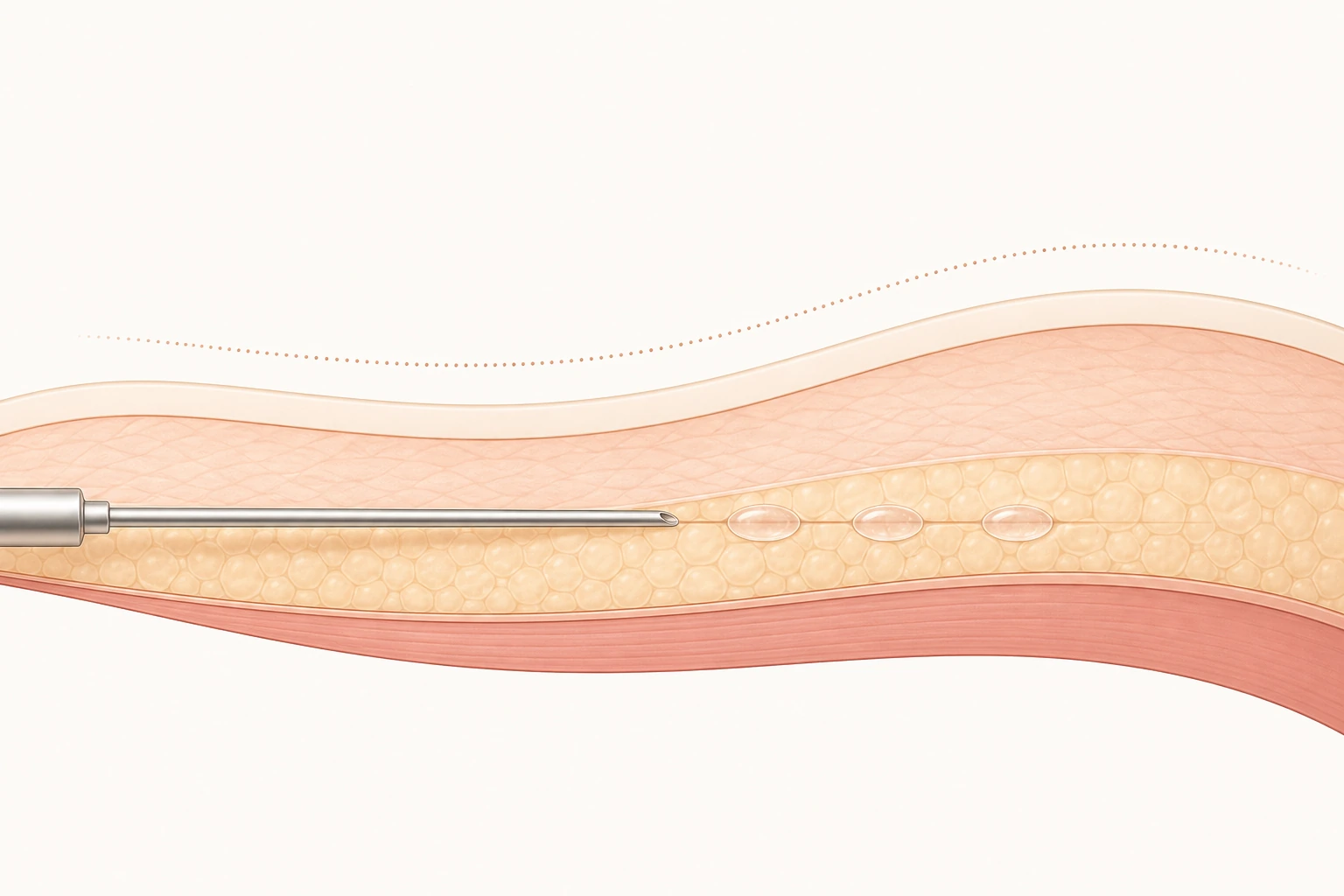
Softer fillers for delicate areas
Dermal fillers differ in chemical make-up, longevity and softness. Softer hyaluronic acid (HA) fillers are used in the lips and around the eyes.


Facial contouring · Singapore
Non-surgical facial sculpting with dermal fillers and anti-wrinkle injections, planned around your proportions for a fresher, more balanced appearance.
Contouring that restores volume and balance to the face.
Facial contouring, also known as facial sculpting, reshapes the face to enhance or improve facial features and reduce the appearance of ageing. By restoring volume to key areas of the face, it can create a natural lift for a fresher, more youthful and balanced appearance.
Facial ageing is a gradual and complex process that affects everyone. As we age, changes in the soft tissue (fat and muscle) and bone of the face lead to visible signs of ageing, including pronounced nasolabial folds, marionette lines, jowling and skin laxity.
Facial contouring can be achieved by surgical or non-surgical means. Our doctors use non-surgical treatments, dermal fillers and anti-wrinkle injections, customised to fit each person's needs and often combined.

How it works
Dermal fillers restore volume where it has been lost and can re-shape and sculpt areas such as the cheeks, temples, chin and jawline. Anti-wrinkle injections placed very superficially into the dermis can tighten the skin, helping to define the jawline and lift the eye area. Your doctor chooses and combines treatments for balance.
Softer fillers for delicate areas
Dermal fillers differ in chemical make-up, longevity and softness. Softer hyaluronic acid (HA) fillers are used in the lips and around the eyes.

Firmer fillers for the chin and jawline
Firmer, thicker fillers may be chosen to enhance the jawline and chin area, where more support is needed.
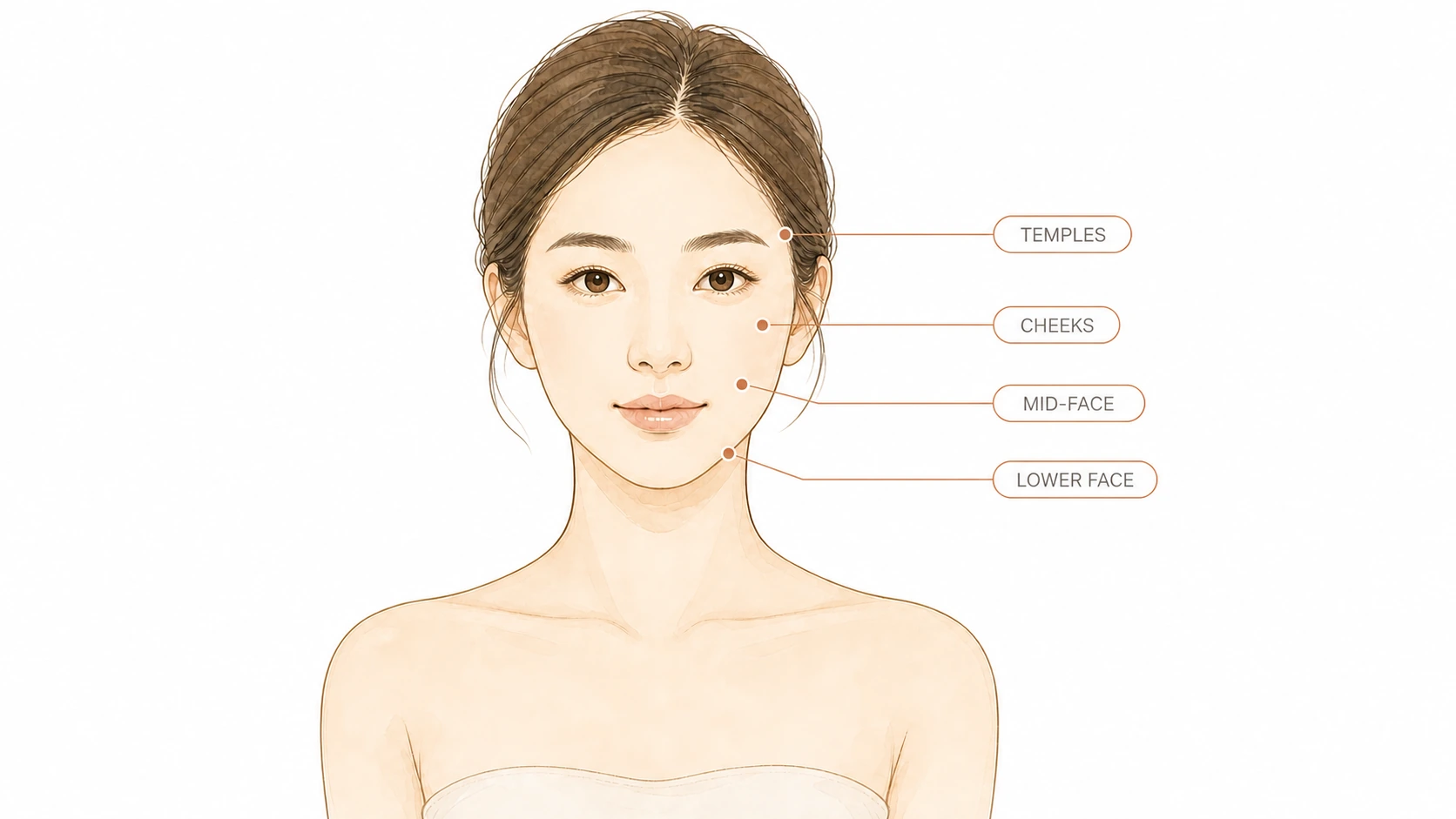
Volumising fillers to sculpt
Volumising fillers are used to re-shape and sculpt the face as well as to add volume, and can be used for the cheeks, mid-face and temples.
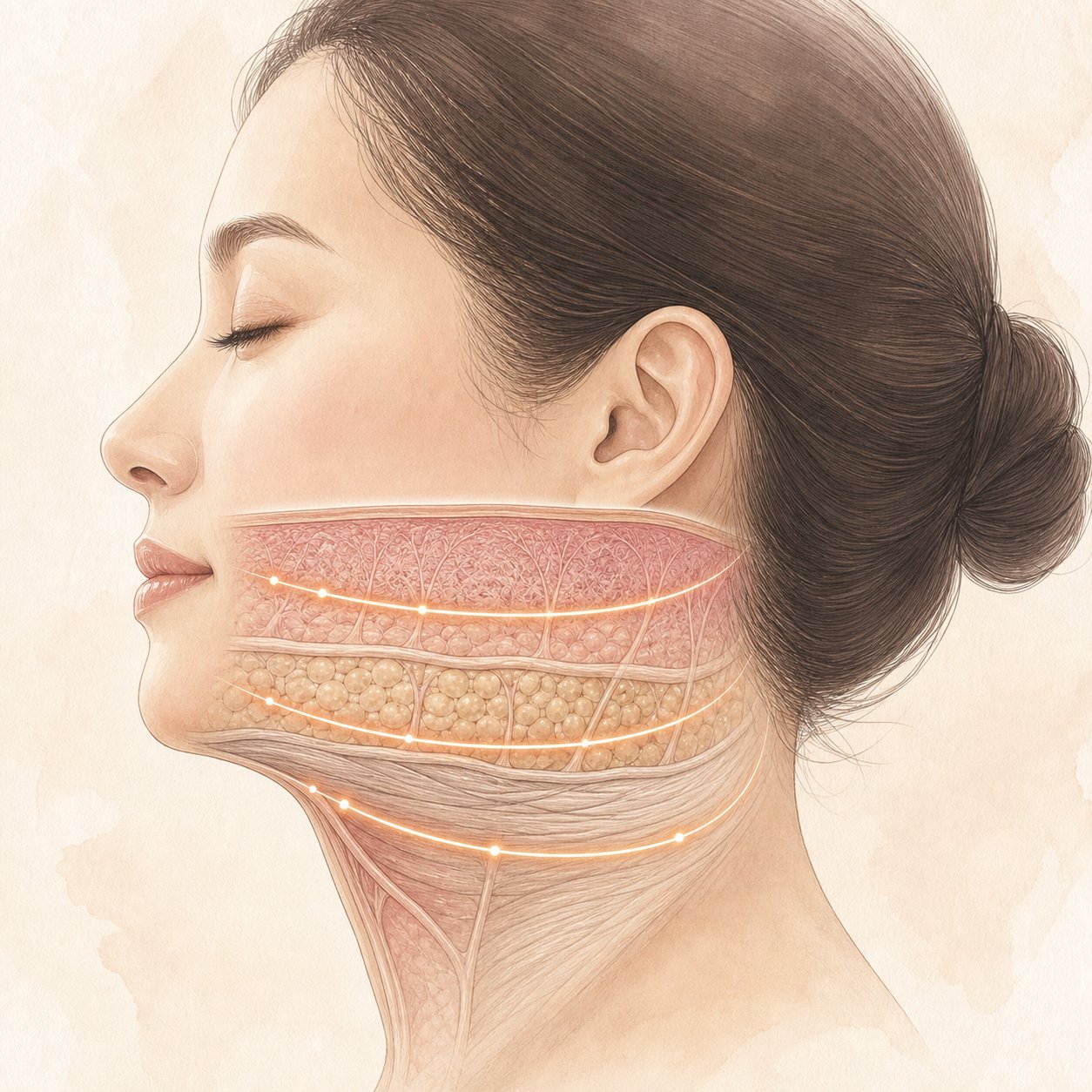
Superficial skin tightening
Placed very superficially into the dermis, anti-wrinkle injections cause contraction and tightening of the skin without affecting the muscles of facial expression. The aim is a more defined jawline with improved jowls, and eyes that look more lifted and less tired.
Personalised assessment
Dermal fillers can be used on the lips, chin, cheeks, sunken under-eyes, nose, forehead, temples and jawline, and superficial anti-wrinkle injections can help define the jawline and lift the eye area. Our doctors help you choose the suitable type and volume of filler based on your existing facial appearance and expectations.
Pregnant, unwell or had filler before? Tell your doctor first.
Volumising fillers restore volume and sculpt these areas; restoring the mid-face can also soften nasolabial folds.
Firmer fillers can enhance the chin and jawline, and superficial anti-wrinkle injections can make the jawline look more defined and improve jowls.
Filler can add height or refine the shape of the nose.
Softer HA fillers are used in the lips, and fillers can also add volume to the forehead.
Softer fillers can restore hollow under-eyes, and superficial anti-wrinkle injections can help the eyes look more lifted and less tired.


Your treatment journey
Your doctor looks at your facial proportions, where volume has been lost and what you would like to change, and explains what non-surgical contouring can achieve.
Together you agree the areas, the type and volume of filler, and whether to add anti-wrinkle injections. Each treatment is customised and may be combined with others.
Numbing cream is applied before fillers, which are placed with small needles or blunt cannulas. Anti-wrinkle injections are placed very superficially where needed.
Mild swelling and bruising usually settle in about a week. You are reviewed at 2 weeks after fillers, and any fine-tuning is done then if needed.
Safety & expectations
Natural-looking contouring comes from balance and moderation, planned around your features.
Facial contouring is planned and performed by a doctor after an assessment of your proportions, medical history and any previous injectables. Seek urgent medical attention for severe or increasing pain, pale or mottled skin or any change in vision after a filler, and for any difficulty swallowing, speaking or breathing after anti-wrinkle injections.
Facial contouring, also known as facial or face sculpting, reshapes the face to enhance or improve facial features and reduce the appearance of ageing. Restoring volume to key areas can give a natural lift for a fresher, more balanced appearance. Our doctors offer non-surgical facial contouring with dermal fillers and anti-wrinkle injections, often in combination.
Yes: facial contouring can be achieved by surgical or non-surgical means, and the facial contouring our doctors offer is non-surgical. Dermal fillers restore volume and sculpt, while anti-wrinkle injections tighten and define, without incisions. Your doctor will explain what non-surgical facial contouring can and cannot change for your face.
A face contour injection usually means a dermal filler placed to add volume or re-shape an area such as the cheeks, chin, jawline or temples. Fillers differ in chemical make-up, longevity and softness: softer HA fillers suit the lips and eyes, while firmer, thicker ones may be chosen for the jawline and chin. Your doctor chooses the type and volume for each area.
How long facial contouring lasts depends on the treatment: results from dermal fillers can last up to 10 months, depending on the type of filler, and anti-wrinkle injection results are likely to last up to 6 months. Fillers dissolve naturally with time, so repeat treatment is needed to maintain the effect. Your doctor will explain what to expect for your plan.
After non-surgical facial contouring, normal activities can usually be resumed straight away. Mild swelling and bruising after dermal fillers may last about a week, so avoid vigorous exercise and extreme heat while it settles. After anti-wrinkle injections, any redness or swelling should settle within the day; avoid massaging your face, strenuous exercise or lying down for 2–4 hours. Filler results are reviewed at 2 weeks.
Anti-wrinkle injections help facial contouring by tightening the skin rather than adding volume. For contouring, they are placed very superficially into the dermis, where they cause contraction and tightening of the skin without affecting the muscles of facial expression. The jawline can look more defined and jowls improved, and the eyes can look more lifted and less tired. They are a prescription-only treatment given by a doctor.
Non-surgical facial contouring uses injectable treatments, so it carries some risks and should be given by a trained doctor after a full assessment. Mild swelling and bruising are common and usually last about a week. Rarely, filler can block a blood vessel: severe or increasing pain, pale or mottled skin, or any change in vision needs urgent attention. Rarely, the effect of anti-wrinkle injections can spread and affect swallowing, speaking or breathing.
Facial contouring may not be suitable, or may need to wait, if you are pregnant or breastfeeding, unwell, have a skin infection in the area or have a nerve or muscle condition. Anti-wrinkle injections are not recommended if you are pregnant, breastfeeding or allergic to cow's protein. Tell your doctor about any previous fillers or other injectables so they can plan around them.
Doctor-led care
Appointments
Book a consultation to discuss which treatment, or combination of treatments, suits your features and goals.