I’m Dr. Juliana Latif, co-founder of Fusion Medical at Wheelock Place. At 37, I had just welcomed my first child and completed a year of breastfeeding. As my husband and I prepared for IVF to expand our family, I noticed a lump during my regular breast self-examination—a habit I’d maintained monthly, even while nursing. I assumed it was just a blocked milk duct. But just a week before our IVF procedure, an ultrasound revealed something I never expected: I had breast cancer.
I thought breast cancer would not happen to me because I was young. Studies have shown that Breast Cancer is caused by a combination of risk factors, and being young does not necessarily mean you will not get Breast Cancer. Risk factors increase your chance of getting a disease, such as Breast Cancer, but having a risk factor doesn’t necessarily mean that you will get the disease.
Lifestyle-related breast cancer risk factors
Knowing these risks allows you to make active decisions to reduce your risk.
1) Alcohol Intake
Alcohol is clearly linked to an increased risk of breast cancer, and the risk rises with the amount consumed. One drink a day raises the risk by about 7–10%, while 2–3 drinks daily can increase it by around 20% compared to non-drinkers.
2) Being overweight or obese after menopause
Before menopause, a woman’s ovaries produce oestrogen for the body. After menopause, fat cells take over this role, therefore, women who are overweight after menopause will have more fat cells to produce more oestroge, thus increasing their risk of Breast Cancer.
3) Physical inactivity
There is increasing evidence that proves that physical inactivity can increase Breast Cancer risk, especially after menopause. According to the World Health Organisation (WHO), adults aged 18-64 should have at least 150 minutes of moderate-intense aerobic physical activity or at least 75 minutes of vigorous-intensity aerobic physical activity throughout the week.
4) Reproductive history
Women who have their first pregnancy after the age of 30, or do not breastfeed, have a slightly higher breast cancer risk overall. Having multiple pregnancies and becoming pregnant at an early age reduces Breast Cancer risk.
5) Birth control
- Oral contraceptive pills: Most studies have linked oral contraceptive users with a higher risk of breast cancer compared to non-users. However, this risk goes back to normal after 10 years.
- Birth control injections: Depo-Provera is an injectable form of progesterone that is administered every 3 months for birth control. Some studies have linked this type of birth control with an increased risk of Breast Cancer, but some have not.
- Birth control implants, Intrauterine devices (IUDs), skin patches, vaginal rings: As these types of birth control use hormones they could theoretically influence Breast Cancer growth. This link has been studied more in hormone-releasing IUDs but less in implants, patches, and rings.
6) Hormone Replacement Therapy (HRT)
There are 2 main types of HRT to control symptoms of menopause in women: Combined HRT, which has both oestrogen and progesterone, and Estrogen-only therapy. The use of combined HRT after menopause has been linked to increased Breast Cancer risk. This risk is typically seen after 4 years of use, with the risk decreasing after 5 years of stopping HRT. [1] Regular monitoring during treatment should also be done, and you should discuss this thoroughly with your doctor.
Breast cancer risk factors that cannot be changed
1) Getting Older
Breast cancer risk increases with age—most cases are diagnosed after 50, but the risk rises significantly from age 40. That’s why regular mammograms are recommended from 40 onwards. Our Singapore government has been very active in this area and does allow us to dip into our Medisave accounts or utilise their Screen for Life programmes.
2) Genetic Mutations
About 5–10% of breast cancers are linked to inherited gene mutations, most commonly BRCA1 and BRCA2. These genes usually help repair damaged DNA, but when mutated, they can lead to abnormal cell growth and cancer. (Think Angelina Jolie.)
On average, a woman (or man) with a BRCA1 or BRCA2 gene mutation:
i) has a 7 in 10 chance of getting Breast Cancer by age 80;
ii) is more likely to be diagnosed with Breast Cancer at a younger age; and
iii) has a higher risk of developing Ovarian Cancer and certain other types of cancer.
3) Having a family history of Breast Cancer
Overall, about 15% of women with breast cancer have a family history of the disease. Having a first-degree relative (mother, sister, or daughter) with Breast Cancer almost doubles a woman’s risk. Having 2 first-degree relatives increases the risk further by about 3-fold.
4) Age of menarche and menopause
Having an early onset of menstrual periods before age 12 and menopause after age 55 exposes women to hormones for longer, theoretically raising their risk of breast cancer.
5) Having dense breasts
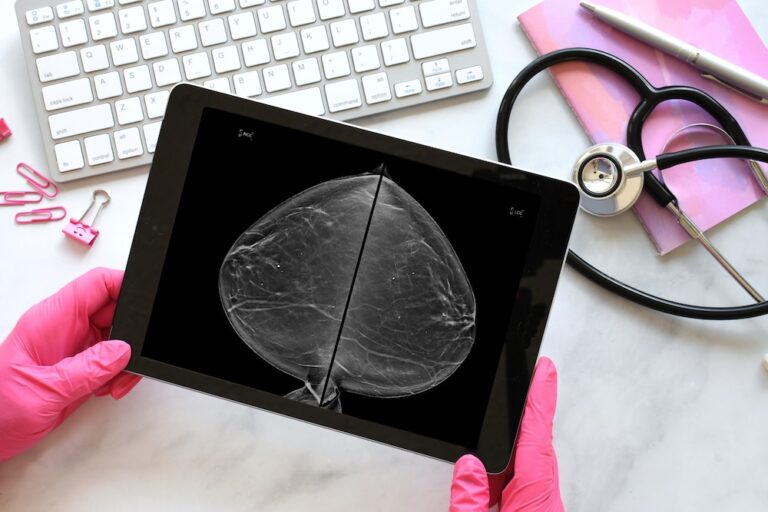
Breasts that are dense have more connective tissue than fatty tissue, which can sometimes make it hard to see tumours on a mammogram. Women with dense breasts on a mammogram had a 1 ½ to 2 times increased risk of breast cancer compared to a woman with average breast density.
Breast cancer doesn’t discriminate by age, and early detection saves lives. My diagnosis at 38 made me realise how vital it is to raise awareness, especially among younger women. While some risk factors are beyond our control, many lifestyle choices aren’t. Knowledge empowers us to take charge of our health through regular screening and early action. Let my story be a reminder: don’t ignore the signs, no matter how young or healthy you feel. Your vigilance could save your life—and give you more time with the people and life you love.
For more information, read our guide to breast cancer screening.
[1] The Women’s Health Initiative clinical trial was conducted in 2002
This guide provides general information and is not a diagnosis or substitute for personalised medical advice.