
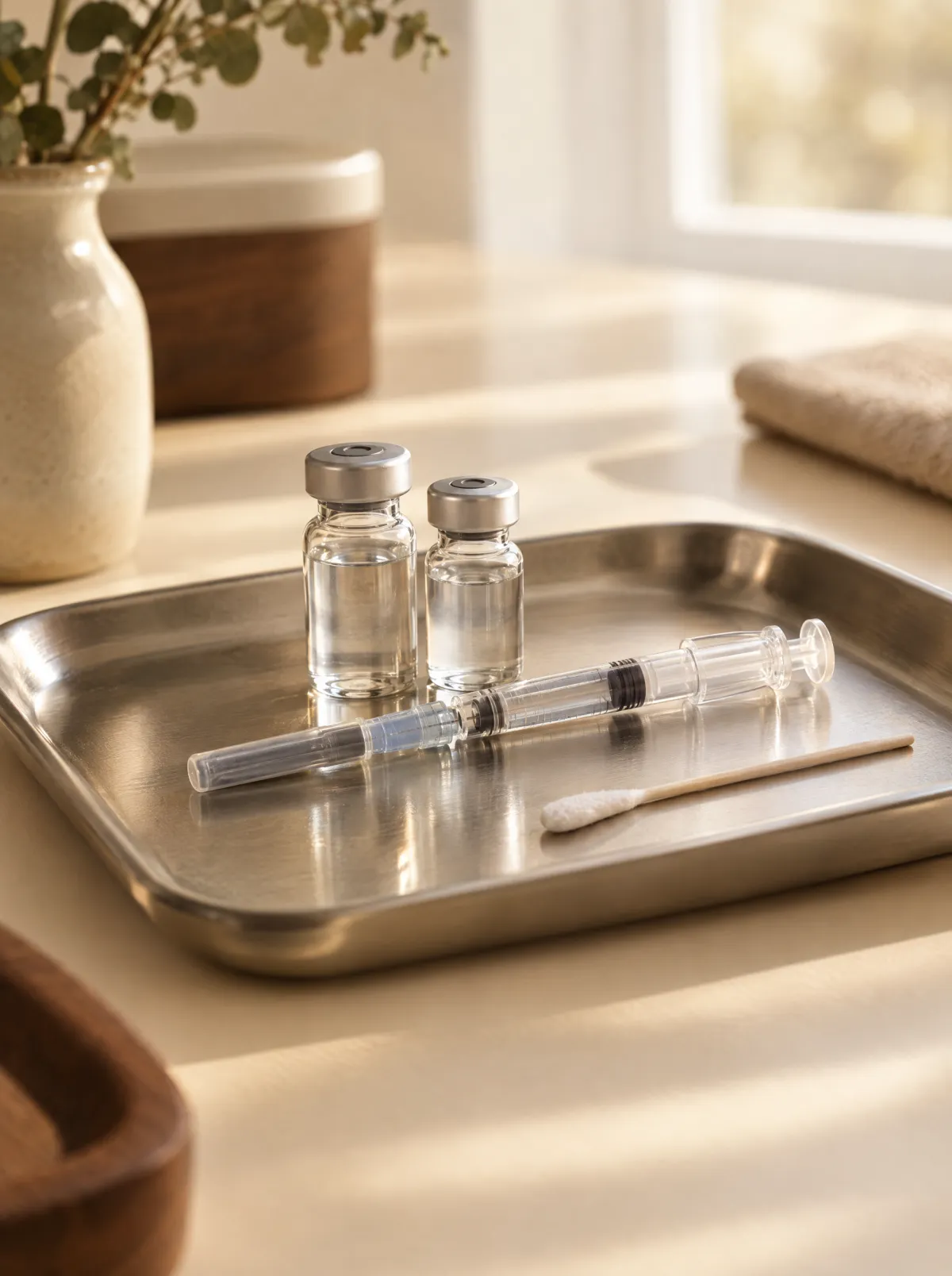
A harmless look-alike
A dose introduces harmless HPV-like particles into the arm muscle. The vaccine has no live virus or viral DNA, so it cannot cause an HPV infection.



HPV vaccine · Singapore
Recommended in Singapore for females aged 9 to 26, and considered up to 45. You need two or three doses, depending on your age when the course starts.
Your immune system meets a harmless look-alike.
The HPV vaccine, sometimes called the cervical cancer vaccine, contains virus-like particles made from an HPV protein. It has no live virus or viral DNA, so it cannot cause an HPV infection. Your body makes antibodies against the HPV types the vaccine covers, which cause about 70 to 90% of cervical cancers, depending on the vaccine. The vaccine does not treat an existing infection.
Human papillomavirus (HPV) is a common virus spread through skin-to-skin contact, including sexual activity. Most infections clear on their own, but persistent infection with high-risk types can lead to cervical cancer. In Singapore, HPV vaccination is recommended for all females aged 9 to 26, ideally before first sexual contact.
How the vaccine works
Each dose introduces harmless HPV-like particles into the upper arm muscle. Your body makes antibodies to the HPV types the vaccine covers, and those antibodies help defend against them on later exposure. That is why the vaccine is ideally given before first sexual contact, and why it does not treat an infection you already have.
A harmless look-alike
A dose introduces harmless HPV-like particles into the arm muscle. The vaccine has no live virus or viral DNA, so it cannot cause an HPV infection.

Antibodies to the types covered
Your body makes antibodies to the HPV types covered. Depending on your age at the first dose, the course takes two or three doses.
Defence on later exposure
Antibodies help defend against the covered types on later exposure. The vaccines cover the HPV types behind about 70 to 90% of cervical cancers, not all of them, so cervical screening is still needed.
Who it's for
The vaccine is ideally given before first sexual contact, but people who are sexually active may still benefit, as they may not have met the HPV types it covers. From age 27, your doctor will discuss whether it is likely to help you.
HPV vaccination is not recommended during pregnancy.
Nationally recommended, ideally before first sexual contact. Eligible girls are offered both doses at school in Secondary 1 and 2.

Not on the national schedule; your doctor advises on the likely benefit. One vaccine available in Singapore is approved up to age 45.
One vaccine is registered for males; the national schedules cover females. A doctor can explain the likely benefits and limits.
Not recommended during pregnancy: remaining doses wait until after delivery, and if a dose was given while pregnant, speak to your doctor. Breastfeeding? There is not enough data, so discuss the timing with your doctor first.


Your vaccination day
We check your age, past doses, health and pregnancy status.
Your doctor explains benefits, limits, side effects and schedule.
The dose goes into the upper arm muscle and is recorded.
Stay seated for 15 minutes; we then plan any remaining doses.
Safety & expectations
Most side effects are mild and settle on their own.
Tell us if you are pregnant, planning pregnancy or breastfeeding, feel unwell or have a fever, have had a severe allergic reaction (including to yeast), or have weakened immunity, a bleeding disorder or take other medicines. With a moderate or severe illness, the dose waits until you recover.
HPV vaccination takes two doses if you start between ages 9 and 14, with the second dose 5 to 13 months after the first, and three doses over about six months if you start at 15 or older. In Singapore, eligible girls are offered both doses at school in Secondary 1 and 2. There is currently no recommendation for a booster dose.
The cost of HPV vaccination depends on the vaccine used, the number of doses you need and the consultation, so Fusion Medical confirms the full fee before your first dose. We offer both the 2-type and the 9-type vaccine. As of September 2026, government subsidies apply to the nationally recommended 2-type vaccine for eligible females at CHAS GP clinics and polyclinics, and MediSave can be used for it up to age 26 at MediSave-accredited clinics. Fusion Medical is a CHAS GP clinic and accepts MediSave for this vaccination, so both can be used here by eligible patients.
Under national rules, yes: as of September 2026, MediSave can be used for HPV vaccination for females aged 9 to 26 at MediSave-accredited clinics, such as polyclinics and participating GP clinics, from your own or an immediate family member's account, within the yearly MediSave500/700 limit. It covers the nationally recommended 2-type vaccine; the 9-type vaccine is not on the MediSave list. Female Singapore Citizens aged 18 to 26 can also receive subsidies at CHAS GP clinics and polyclinics, and Permanent Residents at polyclinics. Fusion Medical is a CHAS GP clinic and accepts MediSave for this vaccination, so eligible patients can use both here.
Yes, HPV vaccination can still be given after 26, but it is outside the national schedule, so your doctor first discusses whether it is likely to benefit you. One vaccine available in Singapore is approved for use up to age 45. If you started the course before 27 but did not finish it, the remaining doses can be completed as early as possible, up to age 45. National subsidies and MediSave apply only up to age 26.
Men can choose HPV vaccination, although it is not part of Singapore's national schedules, which recommend it for females aged 9 to 26. One HPV vaccine is registered for use in males, and men who feel they are at higher risk may decide to have it. In men, HPV can cause genital warts and, less commonly, anal or penile cancer. A doctor can explain the likely benefits and limits for you.
Yes, HPV vaccination can still help if you are sexually active, because you may not have been exposed to the HPV types the vaccine covers. It is ideally given before first sexual contact, and it does not treat an infection you already have. Your doctor can advise whether it suits you, and women still need regular cervical screening from age 25 if they have ever had sex.
Yes, you still need cervical screening after HPV vaccination, because the vaccines help protect against the HPV types behind about 70 to 90% of cervical cancers, not all of them. If you are 25 or older and have ever had sex, national guidance is a Pap test every three years from 25 to 29, then an HPV test every five years from 30. Our cervical cancer screening page explains both tests.
The most common side effects of the HPV vaccine are pain, redness or swelling at the injection site, headache, fever and muscle ache, and they usually settle on their own. Some people feel faint, so you stay seated for 15 minutes after each dose. Seek medical help immediately for a swollen face, eyes, lips or tongue, difficulty breathing or an itchy rash all over.

Appointments
HPV vaccination is by appointment: book at Wheelock Place and bring any record of earlier doses. We confirm your schedule and the full fee before your first dose.