

Two tubes of blood
After your consultation, two tubes of blood are taken from a vein in your arm and sent to Lucence's laboratory with the signed request and consent forms.



Clonal haematopoiesis test · Singapore
A blood sample is checked for age-related DNA changes in blood cells, called clonal haematopoiesis, which are linked to a higher risk of heart attack, stroke and leukaemia. It is prescribed by a doctor and does not diagnose disease.
A risk estimate from your blood cells, not a diagnosis.
CardioHemeRISK is a Lucence blood test that looks for clonal haematopoiesis (CH): DNA changes in blood stem cells that become more common with age and lifestyle. Lucence says CH is not cancer, but it is linked to a higher risk of heart attack, stroke and leukaemia. The test estimates that risk. It is prescribed by a doctor and does not diagnose any of these conditions.
Lucence describes the test for healthy adults over 40 and under 80, people with coronary artery disease or a previous ischaemic stroke, and cancer survivors treated with chemotherapy or radiotherapy. Whether it suits you is decided with your doctor, who looks first at your blood pressure, cholesterol, blood sugar, smoking and family history.
It does not replace health screening, heart tests or cancer screening, and it does not test for inherited genes. An elevated result does not mean you will develop these conditions. Your doctor explains what it means for you and whether further tests are needed.
How it works
Blood stem cells in the bone marrow make all your blood cells. With age, one of them can pick up a DNA change and make more copies of itself than the others. Lucence calls this clonal haematopoiesis (CH): common after 40, linked to ageing and lifestyle, and not cancer. The test measures how much of your blood carries these changes.
Two tubes of blood
After your consultation, two tubes of blood are taken from a vein in your arm and sent to Lucence's laboratory with the signed request and consent forms.

Sequencing blood-cell DNA
The laboratory uses next-generation sequencing to look for CH changes in a set of genes, such as DNMT3A, TET2 and JAK2. It reports changes acquired during life, not inherited ones.

A risk level for each condition
For heart attack, stroke and leukaemia, the report gives a risk level compared with the general population, from average to significantly elevated. It does not say that you have, or will get, any of them.

What your doctor does next
Your doctor reads the result with your blood pressure, cholesterol, blood sugar and blood count. An elevated level may lead to further tests, closer follow-up or a referral to a cardiologist or haematologist.
Who may consider it
Lucence recommends the test for the groups below. Your doctor also weighs your age, heart-risk factors and cancer history, what you would do with the result, and whether you are ready for follow-up tests.
The sample can't be taken within 2 weeks of surgery, a donor bone marrow transplant or a blood transfusion.
Healthy adults in this age range, as an addition to routine health screening.
Adults over 40 with a family history of heart disease, high blood pressure or high cholesterol.

People with coronary artery disease or a previous ischaemic stroke, alongside their usual care.
Cancer survivors treated with chemotherapy or radiotherapy. It is not a test for cancer coming back.
Chest pain, sudden weakness or unusual bruising needs a doctor now, not a risk test.

Your test, step by step
Your doctor reviews your age, heart-risk factors, cancer history and screening, and explains what the test can and cannot tell you.
Two tubes of blood are taken, and you sign Lucence's consent form for genetic testing.
Lucence's laboratory sequences the sample. Lucence gives about 12 working days for the report.
Your doctor explains your risk levels and plans any further tests, lifestyle changes or specialist referral.
Safety & expectations
CH is common with age. A higher risk level is a reason to look closer, not a diagnosis.
Bring your medical history, medicines, family history of heart disease, stroke or blood disorders, and recent blood test results. Tell us about any surgery, bone marrow transplant or blood transfusion in the past 2 weeks. For chest pain or signs of a stroke, call 995.
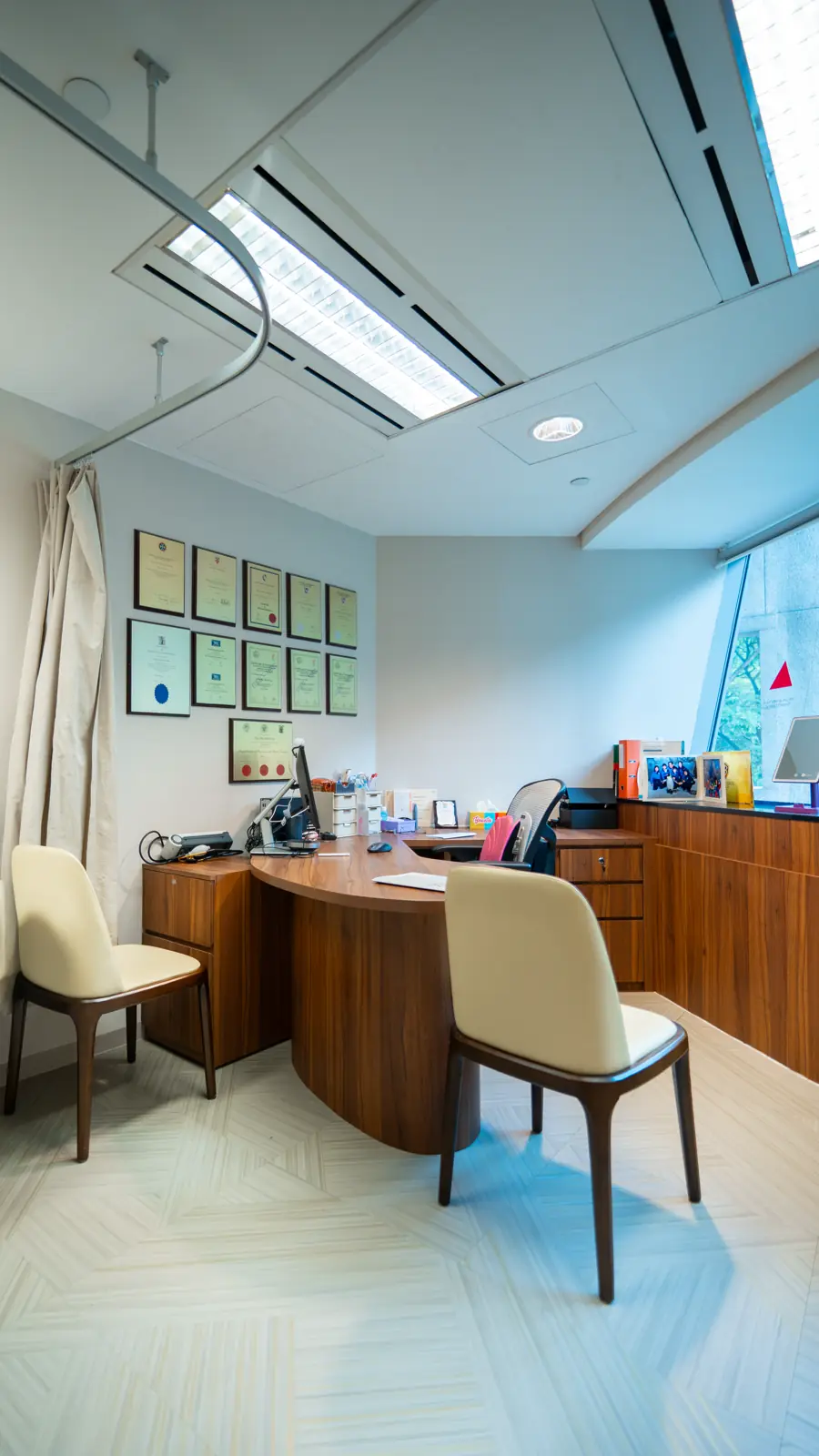
Fusion Medical offers Lucence's CardioHemeRISK test at Wheelock Place, 501 Orchard Road, by appointment. One of our doctors first checks whether the test suits you, then takes the blood sample, sends it to Lucence's laboratory and goes through the report with you. Fees are confirmed when you book.
Clonal haematopoiesis happens when a blood stem cell picks up a DNA change and makes more copies of itself than the others, so a growing share of your blood cells carries that change. Lucence describes CH as common, linked to ageing and lifestyle, and usually starting after 40. It is not cancer, but studies link it to a higher risk of heart attack, stroke and leukaemia.
They look for different things. LucenceINSIGHT looks for signals that cancer cells release into the blood. CardioHemeRISK looks at DNA changes in your own blood cells and gives a risk level for heart attack, stroke and leukaemia; it is not a cancer test. Lucence also offers the two tests together. Your doctor can advise whether one, both or neither suits you.
The report gives a separate risk level for heart attack, stroke and leukaemia, compared with the general population: average, mildly elevated (about 1.1–1.5 times), moderately elevated (over 1.5 and up to 2 times) or significantly elevated (over 2 times). The levels come from published studies and do not include your other risk factors. An elevated level does not mean you will develop the condition.
Your doctor explains the result alongside your blood pressure, cholesterol, blood sugar, blood count and family history. Lucence recommends further confirmatory testing after a positive result. Depending on the level and the condition, the next step may be further tests, closer follow-up or a referral to a cardiologist or haematologist. Lucence notes that knowing your risk may also help you make lifestyle changes.
Lucence reports that, in its laboratory validation, the test detects more than 9 in 10 of the CH changes it is designed to find, with more than 99% specificity, meaning it rarely reports a change that is not there. These figures describe how well the laboratory finds DNA changes. They do not show how likely you are to have a heart attack, stroke or leukaemia.
Lucence gives a turnaround of about 12 working days from when its laboratory receives the sample; this is a guide, not a fixed date. When the report is ready, your doctor goes through it with you and explains any follow-up it may lead to.
Lucence cannot accept blood taken within 2 weeks of surgery, a donor (allogeneic) bone marrow transplant or a blood transfusion, so your doctor may ask you to wait. The test is for screening only: it does not check whether a treated cancer has come back, and it does not test for inherited genes. If you have symptoms, see a doctor rather than waiting for a risk test.
Our doctors

Appointments
Book an appointment at Wheelock Place. Our doctors review your heart-risk factors first, then explain the test, what the result can and cannot tell you, and any follow-up.