Fusion Medical
clinic singapore
+65 6235 1512
Have Any Questions?
Mon-Fri : 8:30am – 5:30pm┃Sat : 8:30am – 1:00pm
wheelock@fusionmedical.com.sg
501 Orchard Rd #04-11, Singapore 238880
Fusion Medical
clinic singapore
+65 6235 1512
Have Any Questions?
Fusion Medical
clinic singapore
A man in his fifties at a sunlit table at home with a bowl of porridge, one hand resting on his upper abdomen

Stomach screening · Singapore

Stomach cancer screening, starting with your risk.

Early stomach cancer often causes no symptoms, or symptoms easily mistaken for indigestion. A doctor reviews your risk first, then suggests an H. pylori test or a gastroscopy when it adds value.

What is stomach cancer screening?

Risk review first, then a direct look when it adds value.

Stomach cancer screening aims to find stomach cancer, and the conditions that raise its risk, before symptoms appear. It starts with a doctor's review of your family history, any Helicobacter pylori (H. pylori) infection, stomach conditions, smoking, diet and symptoms. Depending on your risk, the next step may be an H. pylori test, or a gastroscopy that examines the stomach lining directly and allows a biopsy.

Screening is not the same for everyone. Black stools, vomiting blood, difficulty swallowing, anaemia or unexplained weight loss need prompt assessment rather than routine screening. Blood tumour markers do not replace a gastroscopy and biopsy when a suspicious area needs a diagnosis.

At Fusion Medical, our doctors review your risk and symptoms, arrange a gastroscopy when it is needed, and go through the findings and any biopsy results with you.

  • Risk-led — family history, H. pylori and stomach conditions
  • Symptom-aware — warning signs move you to prompt diagnosis
  • Direct view — gastroscopy examines the lining when needed
  • Tissue confirms — a biopsy, not a blood test, makes the diagnosis
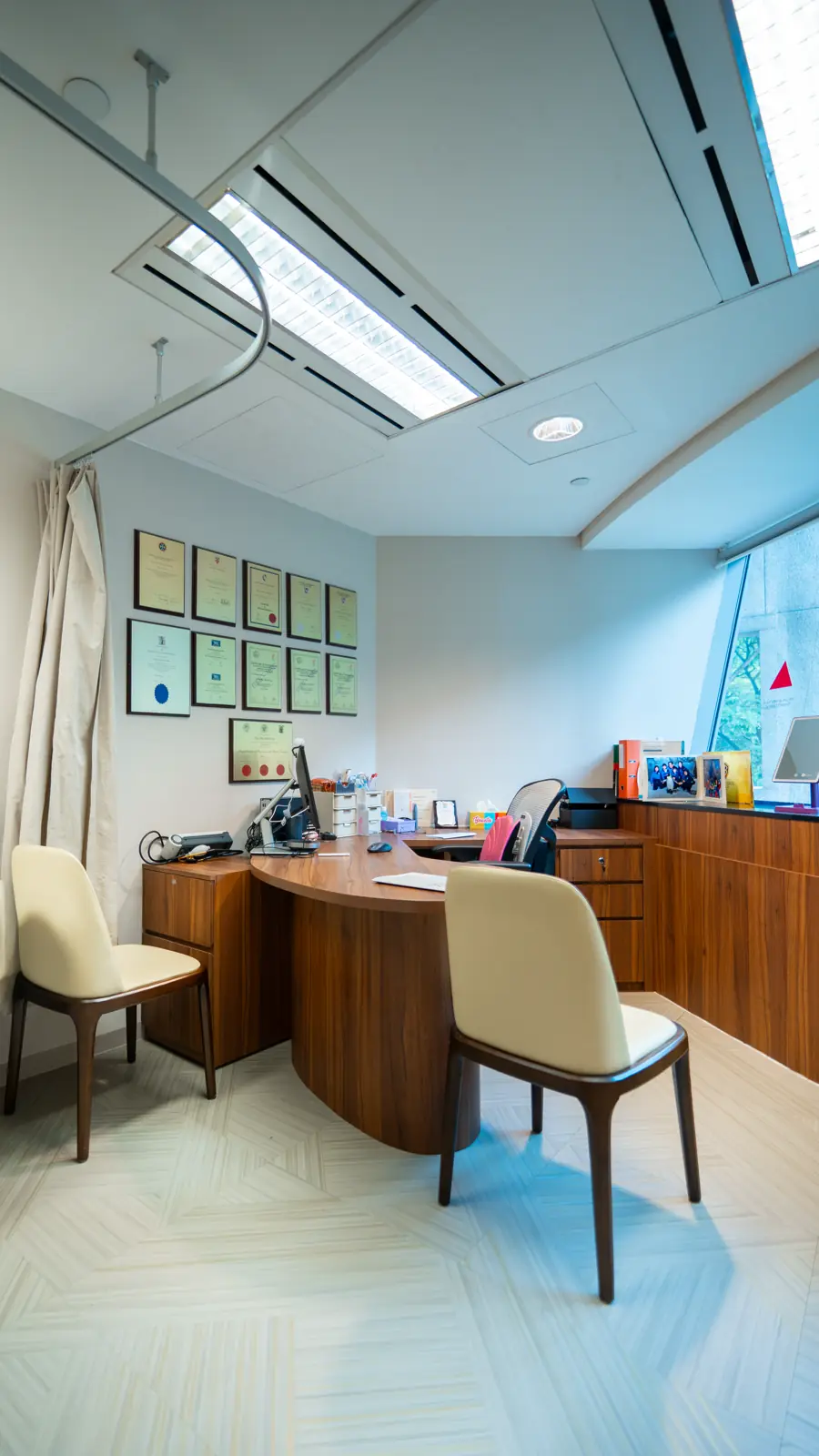
A doctor's consultation room at Fusion Medical, Wheelock Place
Your risk review comes before any test.

The assessment pathway

Which stomach test do you need?

Each test answers a different part of the question. A risk review identifies family, infection, lifestyle and symptom factors but cannot see the stomach lining. An H. pylori test detects a current infection. A gastroscopy examines the lining directly, and a biopsy of any abnormal area confirms the diagnosis.

See the steps

Printed reports, a fountain pen and reading glasses on a wooden desk

A doctor's review of your risk

Your doctor asks about:

  • Stomach cancer in a parent, brother, sister or child
  • A current or past H. pylori infection, and how it was treated
  • Chronic gastritis, stomach polyps or pernicious anaemia
  • Smoking, and a diet high in salted, smoked or pickled foods and low in fruit and vegetables
  • Your symptoms, and any previous endoscopy or biopsy

A microscope with glass slides on a laboratory bench

A desk calendar with a date circled in pencil

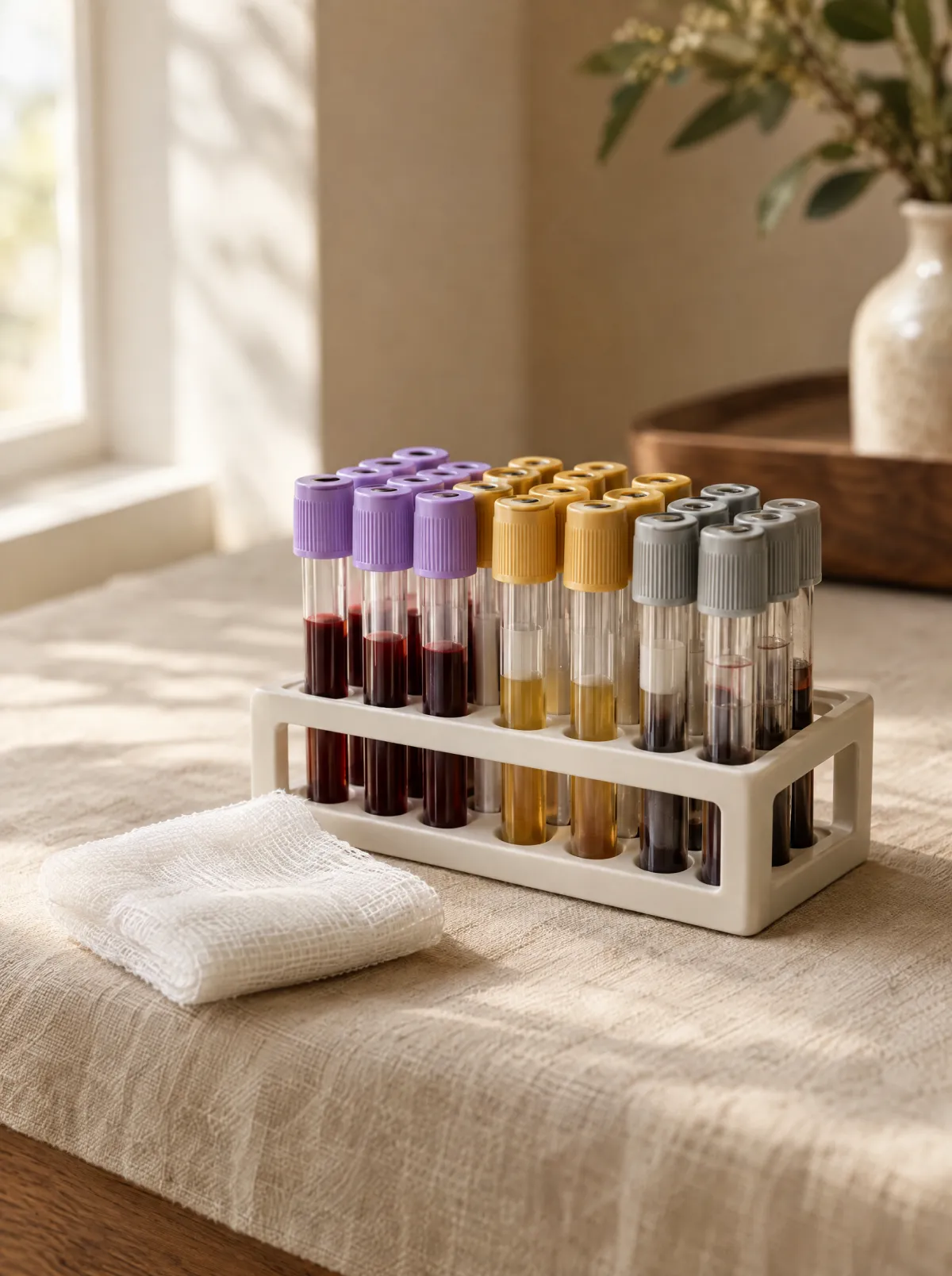
Blood collection tubes in a rack beside a gauze pad

Who it's for

Who should have a stomach cancer risk review?

A risk discussion can help if you have a close relative with stomach cancer, a previous H. pylori infection, chronic gastritis, stomach polyps or other recognised risk factors. Persistent or worrying symptoms need a diagnostic assessment rather than screening.

Vomiting blood or passing black stools? Seek medical care promptly.

Stomach tests at a glance
Test What it can show thenImportant limit
Risk review Family, infection, lifestyle and symptom factors. Cannot see the stomach lining.
H. pylori test A current H. pylori infection. The test method and some medicines affect accuracy.
Gastroscopy The lining of the oesophagus, stomach and upper small bowel, with a biopsy if needed. Needs fasting and preparation; does not assess causes outside the digestive tract.
Biopsy A tissue diagnosis of the area sampled. Taken only when needed during gastroscopy; results take longer.
Blood markers Markers linked to stomach cancer. Do not replace gastroscopy and biopsy.
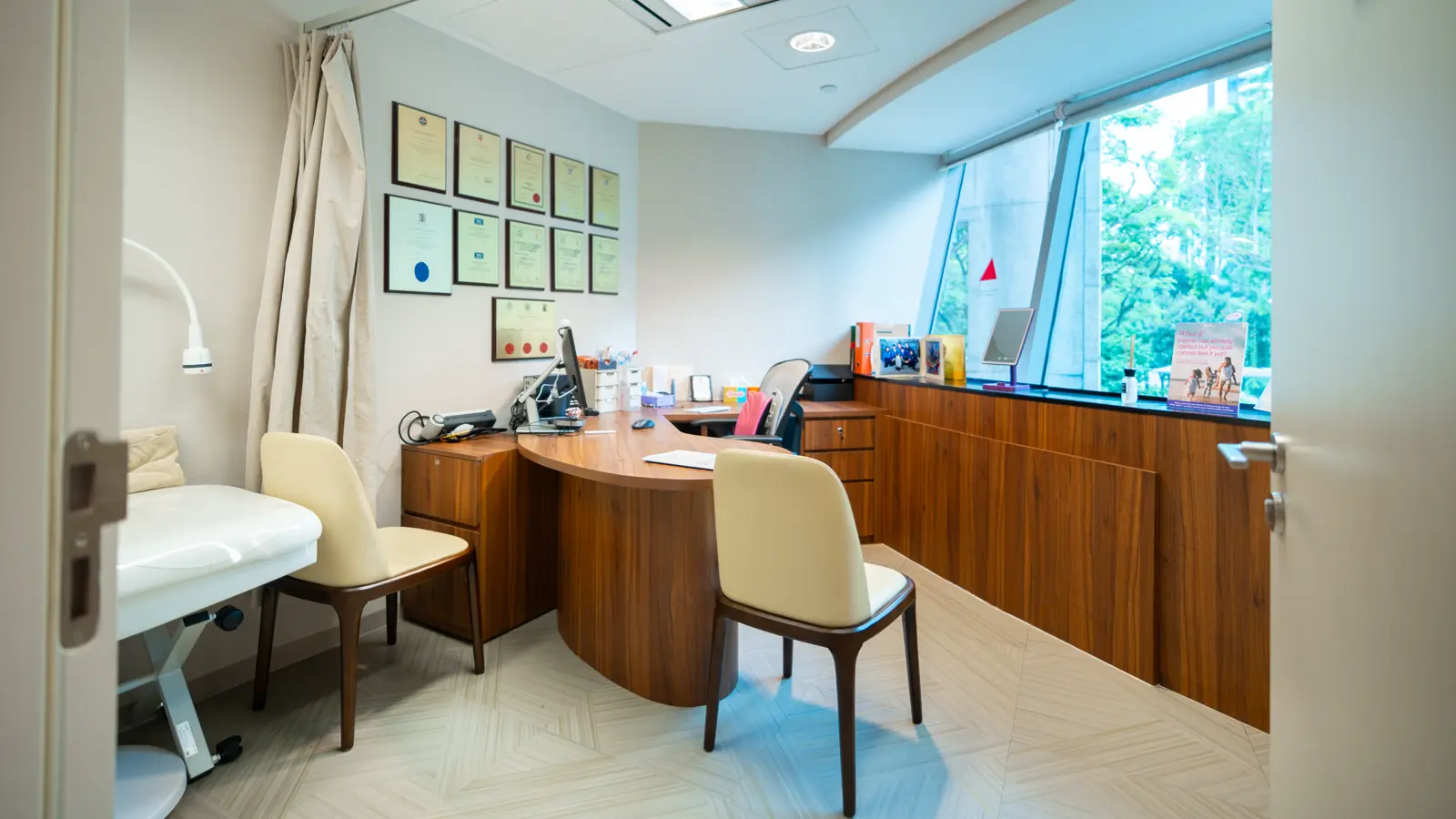
Doctor's consultation room at Fusion Medical, with a desk, an examination couch and a window
A weekly pill organiser and a glass of water on a table

Your assessment, step by step

Consult. Choose. Prepare. Review.

  1. Consult

    Your doctor reviews your symptoms, risk factors and any previous stomach tests, and examines you.

  2. Choose

    Together you decide on an H. pylori test, a gastroscopy or another route, only where it adds value.

  3. Prepare

    Follow the fasting, medicine, escort and sedation instructions for your test exactly.

  4. Review

    Your doctor explains the findings, any biopsy results, treatment and follow-up.

Safety & expectations

What a gastroscopy shows guides the next step. Tissue confirms the diagnosis.

After a gastroscopy you may have a sore throat or bloating for a short while. Biopsy results take longer and are reviewed with you. Severe pain, fever, breathlessness, vomiting blood or black stools after a procedure need urgent medical attention.

Stomach Cancer Screening: frequently asked questions

Where can I get stomach cancer screening in Singapore?

Fusion Medical offers stomach cancer risk assessment at Wheelock Place, 501 Orchard Road. Our doctors review your symptoms, family history and H. pylori history, and advise whether an H. pylori test or a gastroscopy suits you. If you need a gastroscopy, your doctor arranges it and goes through the findings and any biopsy results with you.

Who should consider a stomach cancer risk assessment?

People with ongoing symptoms, a close relative with stomach cancer, a previous H. pylori infection, chronic gastritis, stomach polyps or other recognised risk factors may benefit from a doctor's review. A diet high in salted, smoked or pickled foods and low in fruit and vegetables, and smoking, also raise the risk.

Does an H. pylori test screen for stomach cancer?

No. An H. pylori test detects an infection that is an important risk factor for stomach cancer, but it does not examine the stomach lining or diagnose cancer. If the test is positive, your doctor discusses treatment and whether you need further tests, such as a gastroscopy.

What is a gastroscopy?

A gastroscopy examines the oesophagus (food pipe), stomach and first part of the small bowel using a thin, flexible tube with a camera, passed through the mouth. It lets the doctor see the lining directly and take a small tissue sample (biopsy) from any abnormal area. Afterwards, a sore throat or bloating may last for a short time.

Do tumour markers replace a gastroscopy?

No. Blood tumour markers do not replace a direct examination and biopsy when a suspicious stomach lesion needs a diagnosis. A raised marker needs a gastroscopy to find the cause, and a normal result does not rule out stomach cancer. Your doctor explains what any marker in your results means for you.

Which symptoms need prompt attention?

Black stools, vomiting blood, difficulty swallowing that is getting worse, persistent vomiting, anaemia or unexplained weight loss should be assessed promptly. Ongoing indigestion or heartburn, upper abdominal pain, feeling full after small meals, nausea or loss of appetite also deserve a doctor's review. These symptoms can have causes other than cancer, but they need a diagnosis rather than routine screening.

How should I prepare for a gastroscopy?

Follow the fasting, medicine, escort and sedation instructions from the endoscopy service exactly. Tell your doctor about blood thinners, diabetes medicines, acid-suppressing medicines and supplements, but do not stop any medicine unless you are told to. If you have sedation, arrange for someone to take you home.

How can I lower my risk of stomach cancer?

Keeping a healthy weight, limiting alcohol, not smoking and not eating large amounts of salted, smoked or pickled foods may lower your risk. If you have had an H. pylori infection, ask your doctor whether clearance was confirmed after treatment.

Appointments

Talk to a doctor about your stomach risk.

Book a consultation at Wheelock Place. Our doctors review your symptoms and history, then advise whether an H. pylori test or a gastroscopy is worth doing.

501 Orchard Road, #04-11 Wheelock Place, Singapore 238880 · Mon–Fri 8:30am–5:30pm · Sat 8:30am–1pm